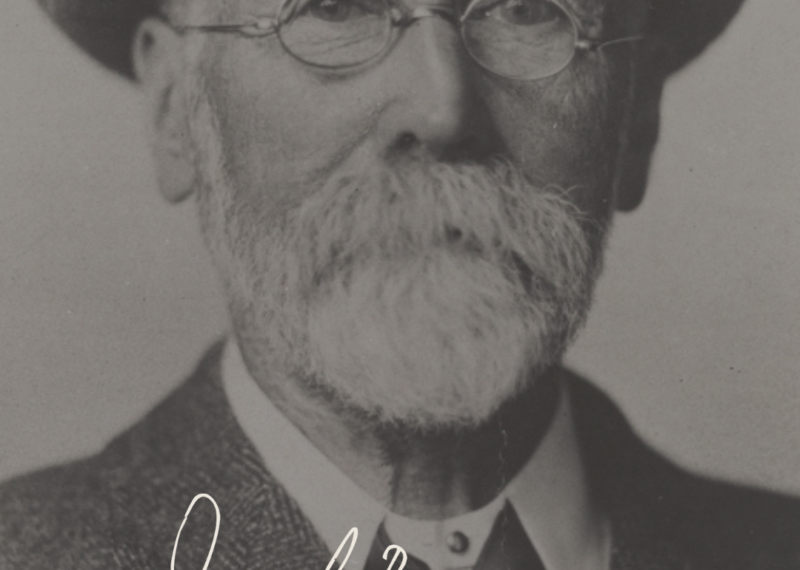
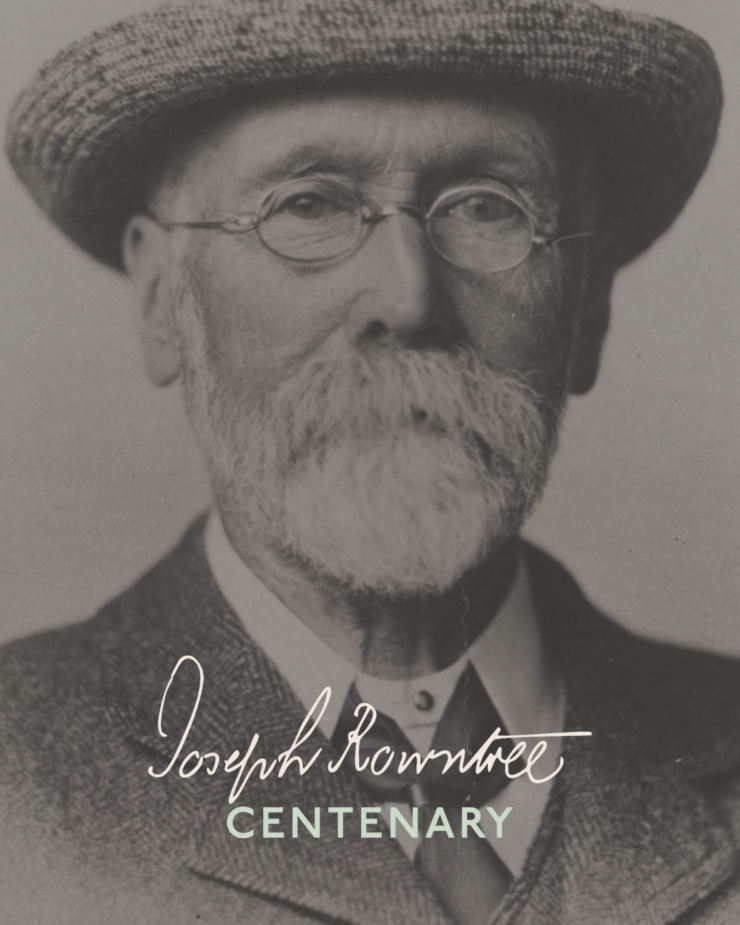
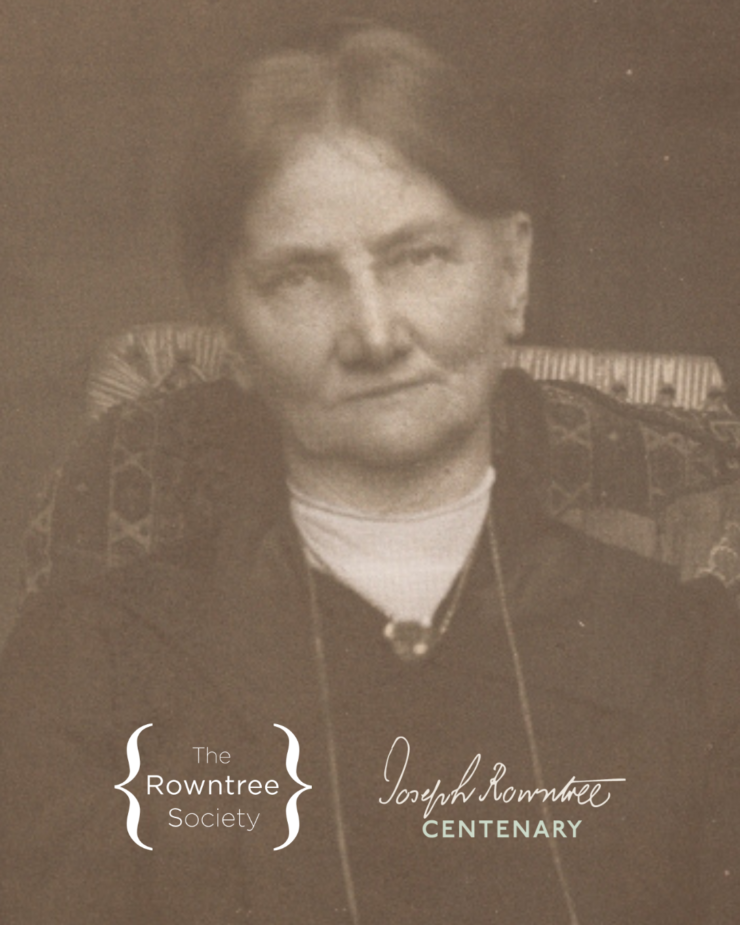
Second wife – mainly focused on home and family

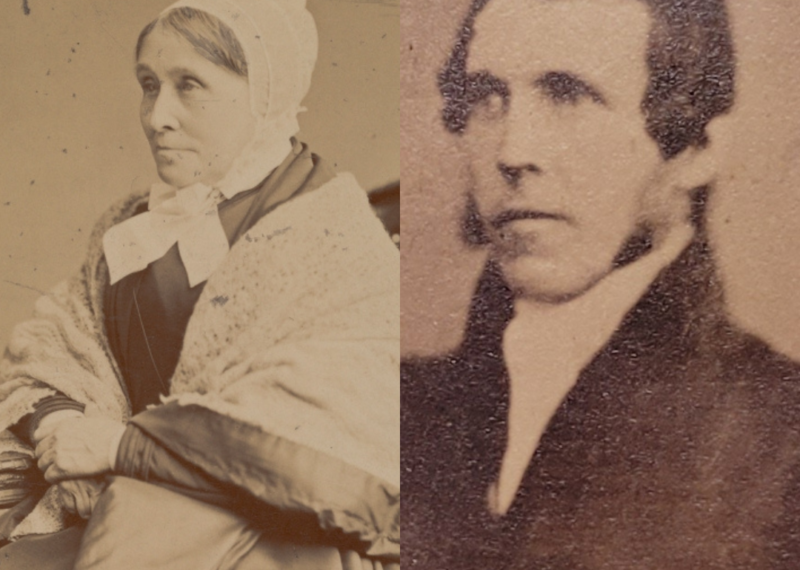
Antoinette or ‘Tonie’ as she was known was Joseph’s second wife and a cousin of Julia. What is known about Tonie focuses on her home and family. She certainly produced some remarkable sons. Snippets of information about her do exist in archival papers such as her liking for music and observations that lead us to believe that life with Joseph could be a little trying at times – such as his heading to the library in the middle of a meal to find a book. Joseph and Tonie were married for 57 years.


Image from originals held at the Borthwick Institute for Archives.
Support Us

Our work is enabled by grant funding from the Joseph Rowntree Foundation, the Joseph Rowntree Charitable Trust, and the Joseph Rowntree Reform Trust. If you would like to make a financial donation to further support our work, it is easy to pay online (with or without Gift Aid) by clicking the link below. You can get in touch with us about other ways of giving via info@rowntreesociety.org.uk

Donate

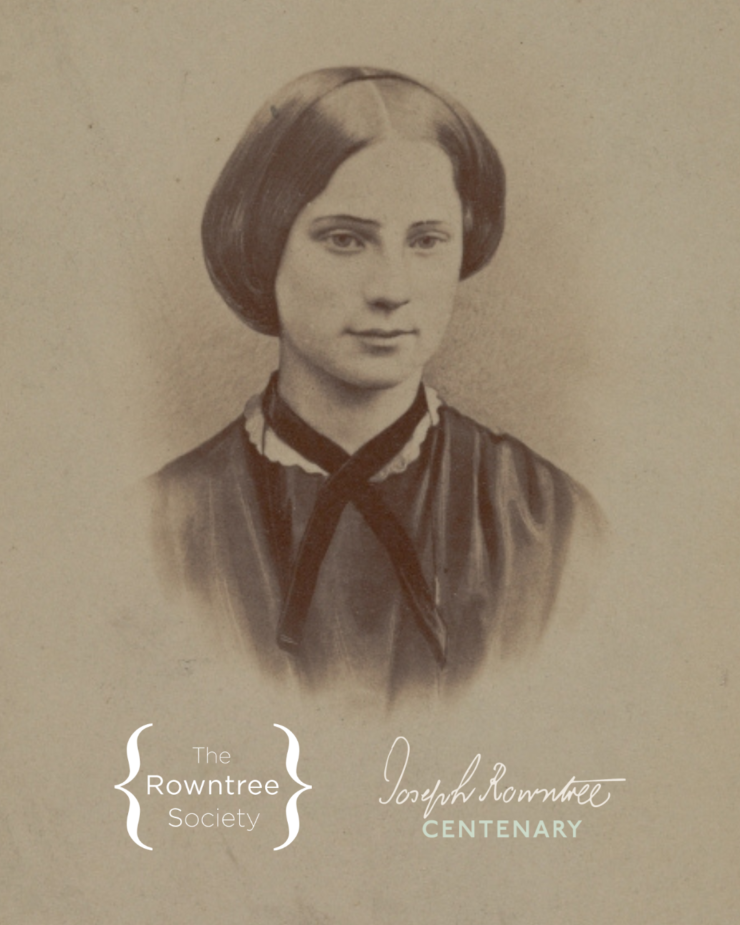
First wife – never forgotten by Joseph

Joseph married twice. His first wife was Julia Seebohm who he married in 1862 and who died the following year. We do not know what she might have become had she lived. However, 187 letters between Julia and Joseph survive at the Borthwick Institute for Archives in York and give a detailed view of her childhood and young adulthood, her family and friendships. Joseph never forgot Julia and their daughter, who also died young, and remained closely connected to the Seebohm family.

Image from originals held at the Borthwick Institute for Archives.

Support Us

Our work is enabled by grant funding from the Joseph Rowntree Foundation, the Joseph Rowntree Charitable Trust, and the Joseph Rowntree Reform Trust. If you would like to make a financial donation to further support our work, it is easy to pay online (with or without Gift Aid) by clicking the link below. You can get in touch with us about other ways of giving via info@rowntreesociety.org.uk

Donate

Top (Penn) House

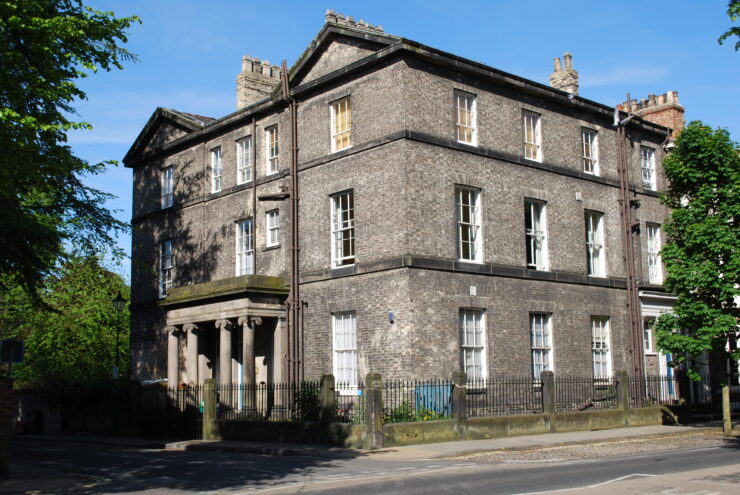
38 St Mary’s and 68 Bootham, situated at the top of the road at the junction of St Mary’s and Bootham, was known as ‘Top House’ by the Rowntree family and was owned by them for 70 years. Joseph lived there as a teenager and the house was later divided to enable family members to live there with separate quarters. Joseph took over ownership when his mother died and it continued to be used by the family when he moved to Clifton Lodge in 1905. In 1920 it was given to Bootham School and became known as Penn House after the Quaker, William Penn. The house is now privately owned.


Support Us

Our work is enabled by grant funding from the Joseph Rowntree Foundation, the Joseph Rowntree Charitable Trust, and the Joseph Rowntree Reform Trust. If you would like to make a financial donation to further support our work, it is easy to pay online (with or without Gift Aid) by clicking the link below. You can get in touch with us about other ways of giving via info@rowntreesociety.org.uk

Donate

Joseph writes to Hannah Rowntree

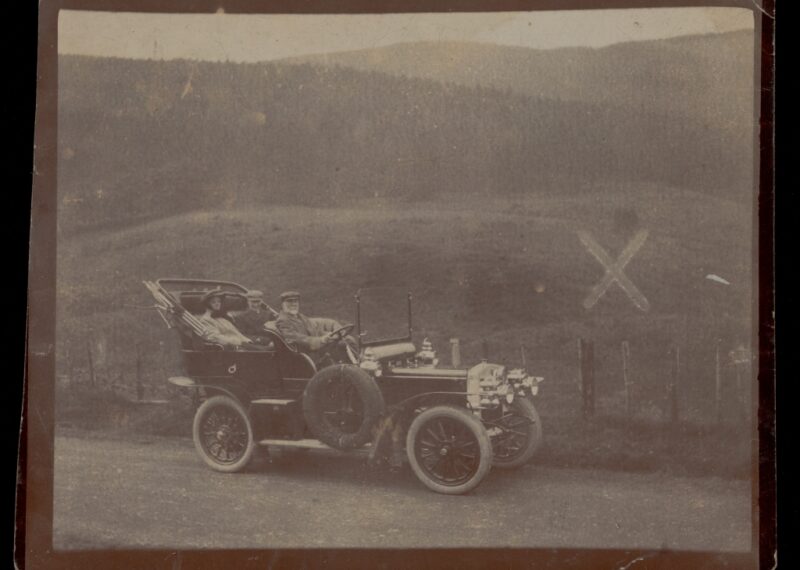
Joseph wrote to his sister, Hannah, on 1st September 1919 about a holiday he had enjoyed at Goathland on the North Yorkshire Moors. His love of nature and the countryside and his keen sense of observation shine through in his writing – “Our finest motor drive was on the high moor, where we had heather on either side of the road, and, if the day were clear, a view of the sea. After riding for some miles you get a commanding view of Whitby Abbey (St. Hilda’s), a good deal damaged by the bombardment, and soon the town of Whitby itself. There is a sudden descent from the high land, where heather and bracken is the surrounding vegetation, to the village of Staithes, with its beautiful flowery gardens, now gay with roses.”

Image from originals held at the Borthwick Institute for Archives.
Support Us

Our work is enabled by grant funding from the Joseph Rowntree Foundation, the Joseph Rowntree Charitable Trust, and the Joseph Rowntree Reform Trust. If you would like to make a financial donation to further support our work, it is easy to pay online (with or without Gift Aid) by clicking the link below. You can get in touch with us about other ways of giving via info@rowntreesociety.org.uk

Donate

Hannah Rowntree

Hannah Rowntree was the only one of Joseph’s sisters to survive to adulthood. She was very close to Julia, Joseph’s first wife, and in 1863 Hannah moved in with Joseph to look after his daughter, Lilley, after Julia’s death. Hannah married George Gillett in 1867 and had five children of her own. George worked in the family business, Gillett’s Bank, which was amalgamated with Barclays Bank in 1919. Hannah was a regular correspondent of Joseph for the rest of his life.

Image from originals held at the Borthwick Institute for Archives.

Support Us

Our work is enabled by grant funding from the Joseph Rowntree Foundation, the Joseph Rowntree Charitable Trust, and the Joseph Rowntree Reform Trust. If you would like to make a financial donation to further support our work, it is easy to pay online (with or without Gift Aid) by clicking the link below. You can get in touch with us about other ways of giving via info@rowntreesociety.org.uk

Donate

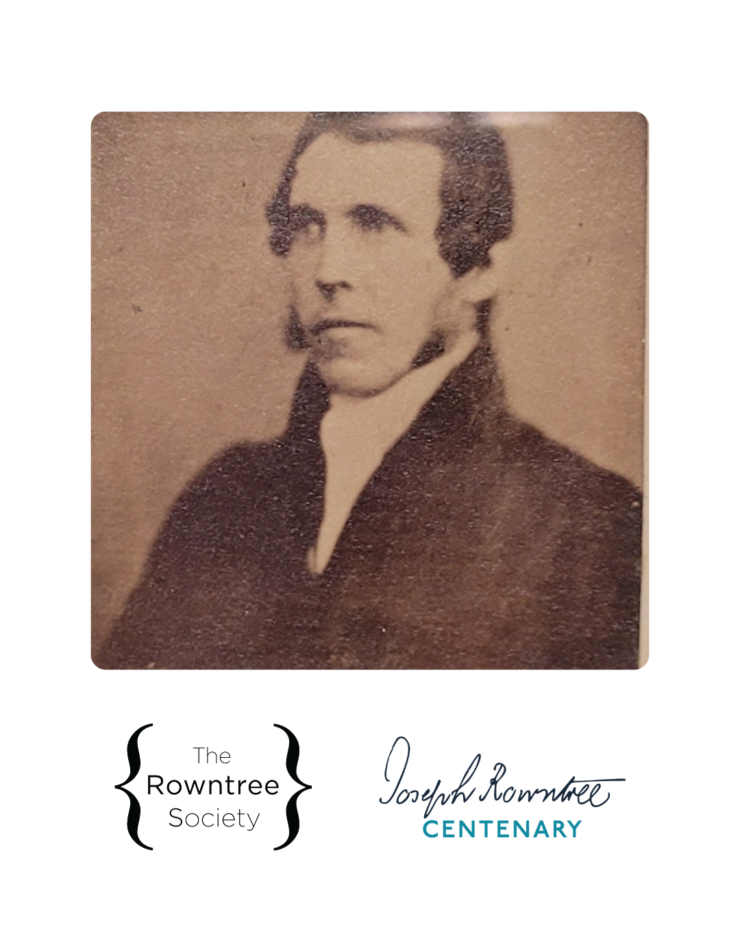
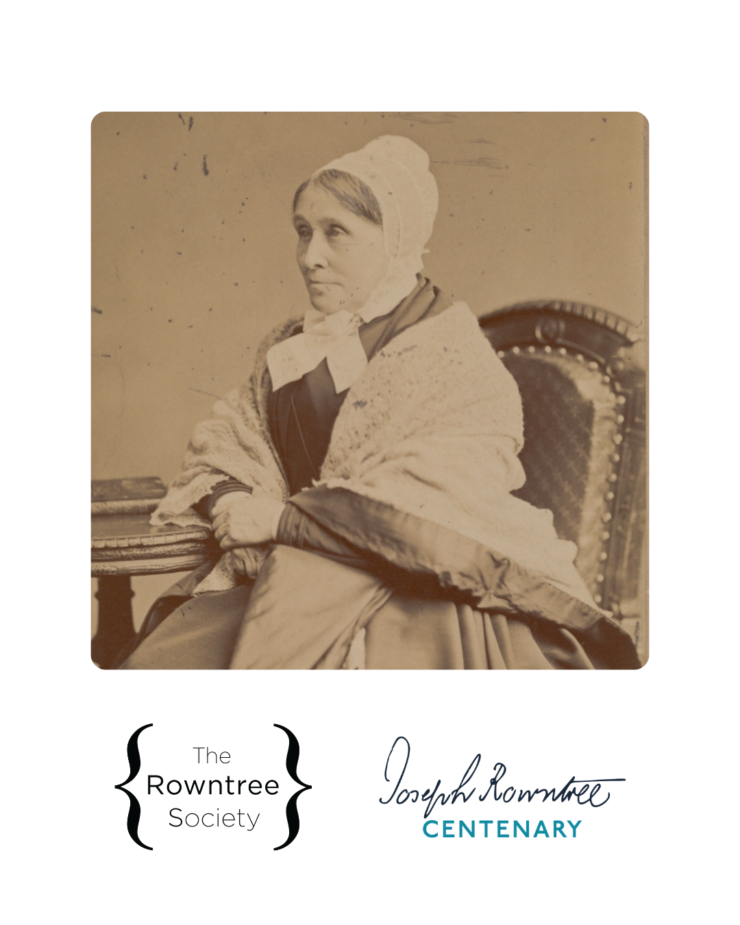
Joseph and Sarah Rowntree

Joseph’s parents, Joseph Senior and Sarah, were Quakers and their social lives – and those of their five children – were conducted within the Society of Friends. Home life included daily scripture study. Joseph and Sarah both undertook useful work which included provision of educational opportunities for boys and adults; measures to address insanitary housing and sewage disposal; and visiting the poor. In later life they were both devoted more time to Quaker interests and the Society of Friends. Their influence was to have a profound effect on Joseph’s actions throughout his life and upon his social vision.

Image from originals held at the Borthwick Institute for Archives.
Support Us

Our work is enabled by grant funding from the Joseph Rowntree Foundation, the Joseph Rowntree Charitable Trust, and the Joseph Rowntree Reform Trust. If you would like to make a financial donation to further support our work, it is easy to pay online (with or without Gift Aid) by clicking the link below. You can get in touch with us about other ways of giving via info@rowntreesociety.org.uk

Donate

Who was Joseph Rowntree?

“A private man compelled by forces within him to become a public philanthropist” Chris Titley, Joseph Rowntree, 2013 Joseph Rowntree, the man who made Rowntrees into a household name, was an extraordinary figure in his own right – a philanthropist far ahead of his time, a progressive employer, a radical thinker and a social innovator.

Image from originals held at the Borthwick Institute for Archives.
Support Us

Our work is enabled by grant funding from the Joseph Rowntree Foundation, the Joseph Rowntree Charitable Trust, and the Joseph Rowntree Reform Trust. If you would like to make a financial donation to further support our work, it is easy to pay online (with or without Gift Aid) by clicking the link below. You can get in touch with us about other ways of giving via info@rowntreesociety.org.uk

Donate

What is Joseph’s legacy? Impact in the 100 years since his death…

“Few Englishmen of the last century have left behind them a more remarkable body of achievement in the realm of social practice and experiment.” A G Gardiner, journalist and writer ‘The Nation’, on the death of Joseph Rowntree 1925.

Image from originals held at the Borthwick Institute for Archives.

Support Us

Our work is enabled by grant funding from the Joseph Rowntree Foundation, the Joseph Rowntree Charitable Trust, and the Joseph Rowntree Reform Trust. If you would like to make a financial donation to further support our work, it is easy to pay online (with or without Gift Aid) by clicking the link below. You can get in touch with us about other ways of giving via info@rowntreesociety.org.uk

Donate