
“Come, Let Us Reason Together”: Trade Unions at Rowntree & Co. in the 1920s Part 3: Fred Hawksby
 By Nick Smith
Published on 1st June 2026
This is part 3 of The Rowntree Society’s research into the relationship between the Rowntree family and trade unions in the 1920s. In parts 1 and 2 we explored Seebohm Rowntree’s approach to industrial relations at Rowntree & Co. and how the General Strike of 1926 impacted the company. You can find them here. This part will tell the story of Fred Hawksby, trade union leader at Rowntree’s and their first Chief Shop Steward.
Chief Shop Steward
One of the innovations Rowntree’s made in their relationship with their unions was in establishing the position of Chief Shop Steward. This was a role paid for by the company and provided their own office in the Cocoa Works’ Employment Department. After negotiations with the Executive of National Union of General Workers (NUGW, later became NUGMW), Fred Hawksby was appointed to this role in the summer of 1920.[1] Hawksby had been working in the Extract Block, and he was the vice-chair of the Central Works Council, as well as the President of the York Branch of the NUGW (making him the main trade union leader at Rowntree’s Cocoa Works).
Seebohm noted “…it would be desirable to have on the staff in the Employment Department someone in close touch with the workers who would be able to voice their point of view, and F. Hawksby’s name had been suggested…”. Following his appointment as Chief Shop Steward, Hawksby was re-elected on the Central Works Council as a nominated member despite opposition from the more militant trade unionist Jack Baker.[2]
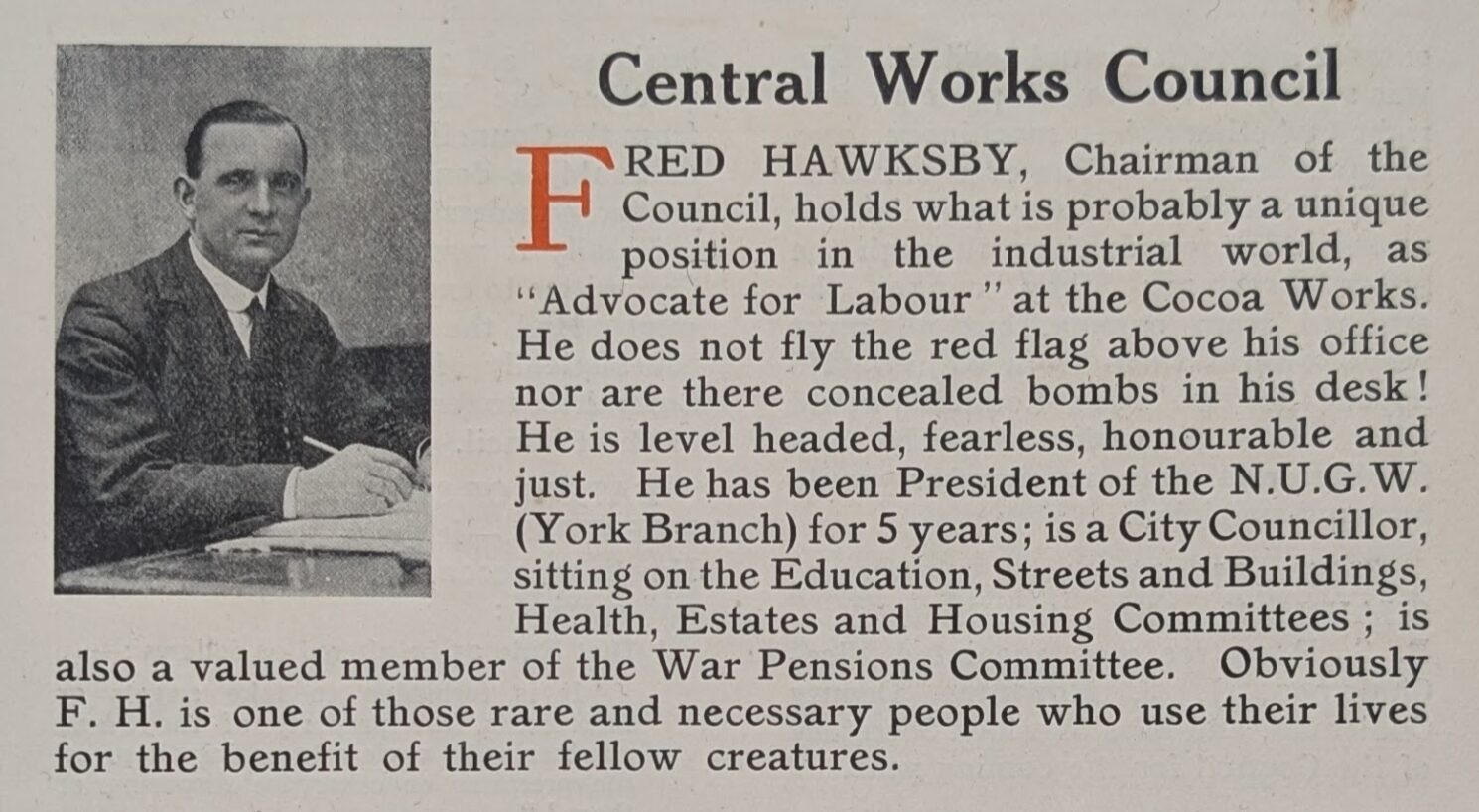
A focus on Fred Hawksby before the Central Works Council minutes in the June 1923 issue of The Cocoa Works Magazine
Researching Hawksby
The Rowntree Society were keen to find out more about who Fred Hawksby was. We used the kinds of evidence family historians often consult such as the census and military records. In addition, we investigated documents held in the Rowntree archives at the Borthwick Institute for Archives, issues of the Cocoa Works Magazine, and even citizen history by asking in York-based Facebook groups. Through this, we were able to piece together much of his life story.
Hawksby’s Early Years
Fred Hawksby was born in Asenby, between Boroughbridge and Thirsk, in 1884. His father, Thomas, did various low paid rural jobs including working as a gamekeeper and an agricultural labourer. However, by the time Hawksby was 6 his father had died. This left his 29-year-old mother, Susannah, as a single parent to three children and working as a charwoman – doing casual, low-paid domestic cleaning in other people’s homes.
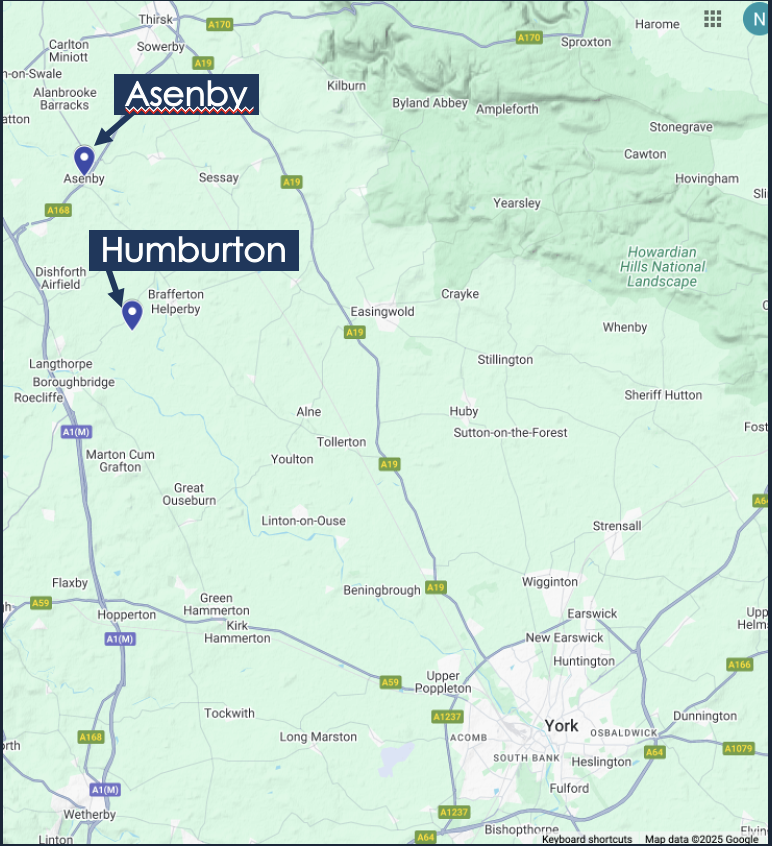
Asenby and Humburton in relation to York – Google Maps 8th May 2025
By 1901, when he was 16, Hawksby had left Asenby to work as a servant horseman on a farm at Humburton, about five miles south of Asenby. While working there, he joined the West Yorkshire Militia, a part-time army reserve force. From the autumn of 1901 to October 1902, the Militia, with Hawksby among them, were posted to active duty in Malta, protecting communication lines and prisoners-of-war from the Boer War. When not in Malta, the regiment was stationed in Chatham, Kent, alongside the 11th Hussars, which Hawksby enlisted with in August 1902, shortly after turning 18, continuing his work with horses.
On his enlistment paperwork, he is described as 5’4” tall, with a fresh complexion, grey eyes, brown hair, and a tattoo reading “Highland Soldier” on his left forearm. During his time with the 11th Hussars, he was attached to the 13th Hussars and posted to India for three years, returning in November 1909. The following year he moved to the Army Reserve, and it is likely that this is when he moved to York.
Fred Hawksby in York
The 1911 Census shows that 26-year-old Fred Hawksby was working at Rowntree’s as a general labourer and was boarding with his colleague Thomas Edward Watson’s family on Redeness Street, in the Layerthorpe area of York. At that time, the area was made up of terrace houses and dominated by the gasworks and power station. Much of this has since been demolished, and the neighbourhood now bears little resemblance to its early 20th-century appearance.
One street that does remain is Hawthorn Street, where Hawksby moved after marrying his wife, Harriet, in 1914. He continued to live there for the rest of his life. The terraced street was very close to the railway branch line connecting with the Cocoa Works, which must have made living conditions cramped. By 1921, the household included Fred and Harriet, Harriet’s sister Lydia, and a boarder, Ellen Thompson – both also Rowntree’s employees. Fred and Harriet Hawksby only had one child, a son called Walter who was born in 1927, who sadly died at the age of seven.
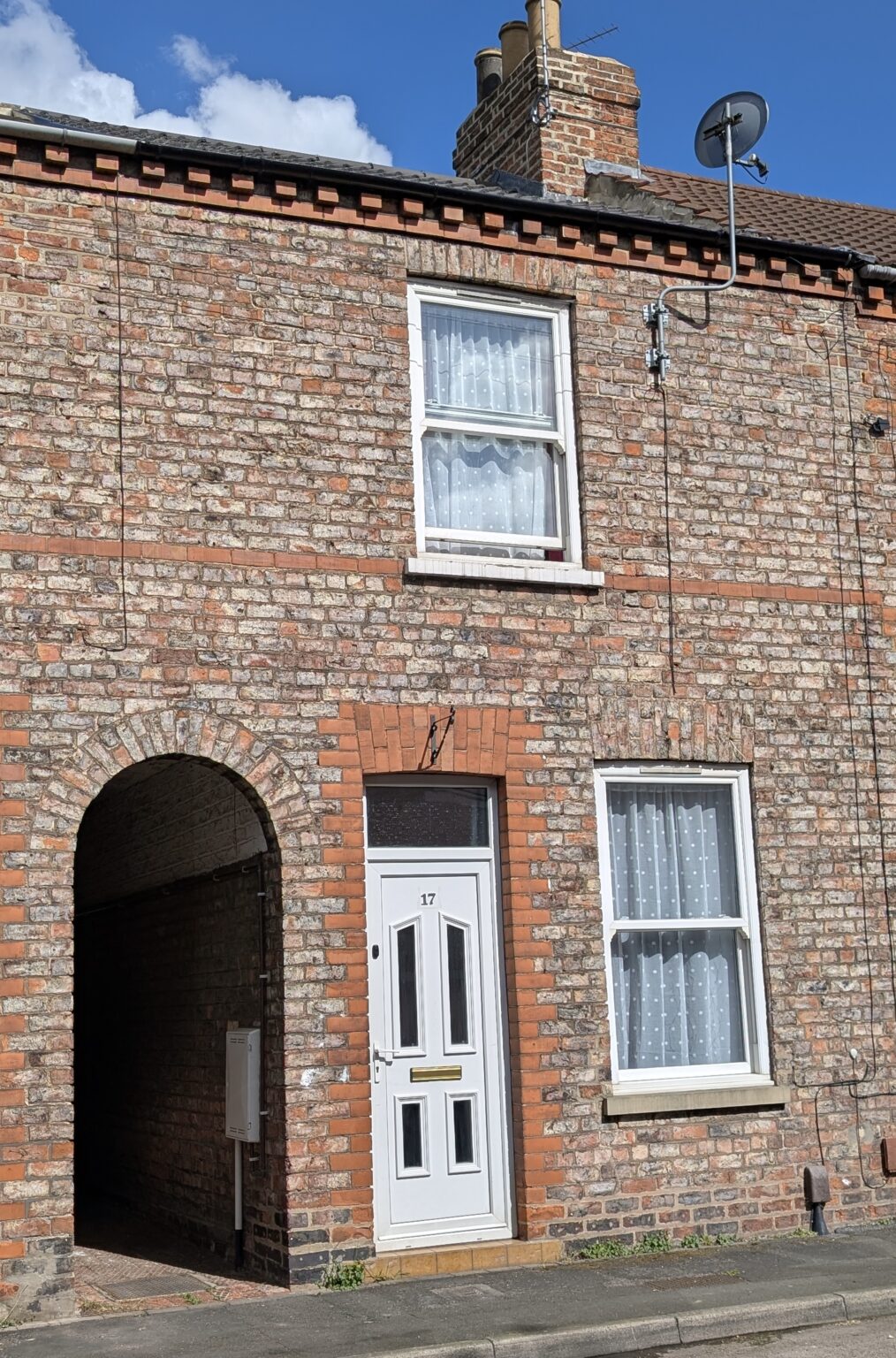
Hawksby’s home, 17 Hawthorn Street in 2025 – The Rowntree Society
In 1912, Hawksby injured his ankle which ruled him out of serving in the First World War. He became the President of the York branch of the NUGW in 1918 and in November 1921, was elected as a Labour councillor for Monk Ward in what was described as a surprise result.[3] During his time on the council, he served on committees for Streets and Buildings, Health, Estates, Public Libraries and Housing.[4] The latter alongside Alderman Oscar Rowntree, Seebohm’s youngest brother and a Rowntree & Co. director.
Fred Hawksby at the Cocoa Works
Something of how Hawksby conducted himself at work, certainly in the early days, can be gained from the minutes of a meeting held in November 1916.[5] A complaint was made to the factory manager, T.H. Appleton, and other management about Hawksby’s “bullying and domineering attitude” particularly towards the women workers. It seems like Hawksby had only recently gainer a promotion, likely to some grade of overlooker. A lower-level manager, only named by the initials G.T.L., asks why this issue was not brought to him first before going to Appleton. The reason given is that G.T.L. is Hawksby’s brother-in-law! After much discussion, it was agreed that the issue lay with Hawksby’s blunt manner and G.T.L. would speak to him about it.
It was in his role of Chief Shop Steward where Hawksby had the greatest impact at Rowntree’s. Seebohm Rowntree seems to have held real affection for him, as did both the Labour Manager, Clarence Northcott, and William Wallace. Any issues which might impact the workers were brought directly to Hawksby.[6] Seebohm would often arrange to meet him to discuss company issues at the Station hotel – both a neutral and private space where they could talk freely and Hawksby be shown confidential documents including the company accounts.[7] Northcott later recalled that before such meetings, Seebohm would declare “come, let us reason together”.[8] It is a Biblical quote from Isiah 1:18 that reflects Seebohm’s Quaker approach in dealing with issues through dialogue and understanding.
Hawksby was an ever-present member of the Central Works Council, holding leadership positions and serving on many of its sub-committees. In early 1923, he undertook a review of the workplace democracy structure below the Council and introduced significant changes.[9]
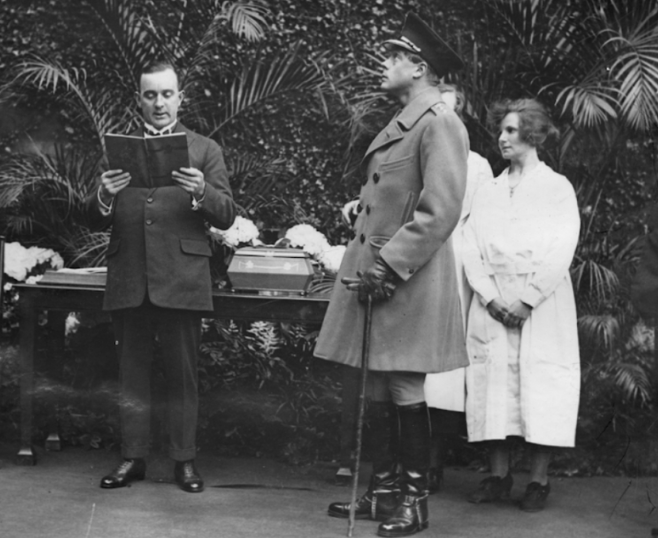
Hawksby presenting a casket of chocolates from Rowntree’s workers to the Prince of Wales in 1923 – City of York Council / Explore York Libraries and Archives Mutual Ltd Asset ID 1002833
Overseas Visits
In early 1925, Hawksby was struggling. This was just after Joseph Rowntree’s death and in addition to his usual work, Hawksby had been involved in arranging the Cocoa Works’ memorial activities. The Central Council minutes record that he was suffering from “overstrain”, and so Rowntree’s had arranged for him to visit South Africa for a break from April 1925. Another trade unionist at the Cocoa Works, Irene Pickup, was appointed Assistant Chief Shop Steward to support Hawksby and cover his duties whilst he was away.[10] The journey to South Africa was not relaxing though, as the following issue of the Cocoa Works Magazine reports that Hawksby suffered from neuritis during the rough sea crossing.[11]
Hawksby made another trip abroad in the 1920s, travelling with Northcott to the United States of America in September 1926. This was a Rowntree’s initiative to study American companies and what could be learnt from them. The full report of this visit is preserved in the Borthwick Institute for Archives[12], and the Cocoa Works Magazine printed what Hawksby and Northcott shared with a meeting of workers on their return.
Hawksby’s account conveys an almost giddy excitement about his experiences in the United States and the innovations he believed could be adopted at the Cocoa Works. He was particularly impressed by the high wages, the co-operation between workers and management, and the more advanced technology. At the meeting, however, both Northcott and Arnold Rowntree followed with a more cautious tone. Northcott stated that they had intentionally only visited “good firms”, and recalled that on an earlier visit American businesses “…regarded this factory as a sort of philanthropy, kept up by advertising. I find that to-day they regard Rowntree’s as an up-to-date efficiently managed place.” Arnold pointed out that not all problems had been solved in America, but that the company would learn from the report. He set out a more practical approach, saying “we want less vague talk. We must get down to practical questions”.[13]
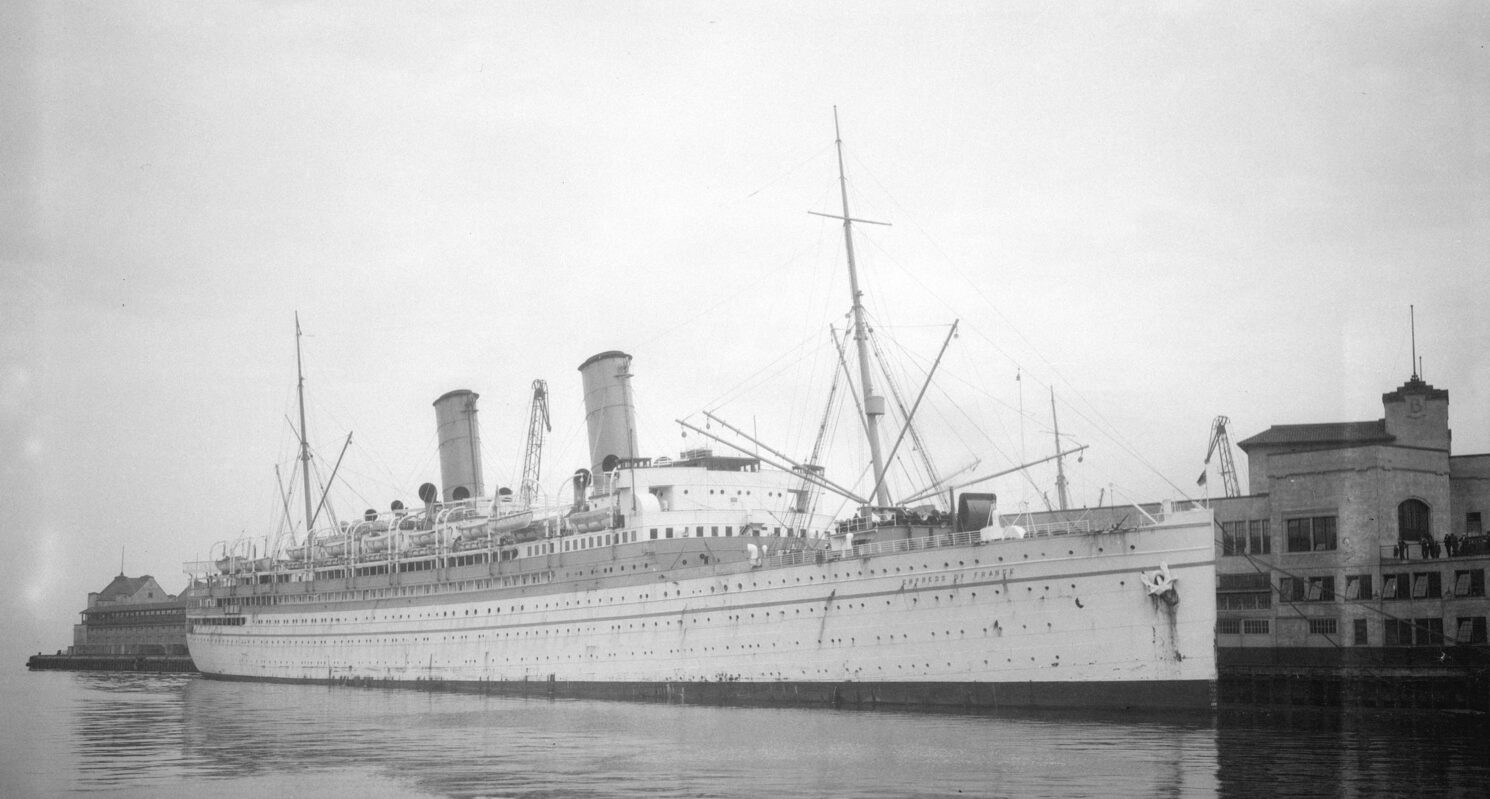
SS Empress of France, the ship Hawksby & Northcott sailed on to USA in 1926 – City of Vancouver Archives ref CVA 447-2191, Public Domain
Fred Hawksby after the 1920s
Hawksby continued as Chief Shop Steward right until his death in August 1946 at the age of 62. The Cocoa Works Magazines from the time gives the impression of the shock felt through the Cocoa Works at his passing. He seems to have suffered from bouts of poor health for many years beforehand with letters to him from both Seebohm and Seebohm’s assistant, F.D. Stuart, mentioning his health – Hawksby having been either in hospital or looking well on recovery.[14]
His relationship with Seebohm continued to deepen, and they remained in contact following Seebohm’s move away from York in 1936. When Seebohm’s wife, Lydia died in 1944, Hawksby wrote a poignant letter of condolence to Seebohm. In it he remembered that “Mrs Seebohm was indeed a lady who endeared herself with all whom she came in contact with, I well remember the kindly interest she took in the work of the Central Council and the many happy occasions when the members were invited to spend a social evening at the Homestead. Many who went for the first time told me that they went with a feeling of shyness but Mrs Seebohm by her charms and personality soon made them feel they were members of a happy family.”[15] Seebohm’s reply is signed off with “I am your friend sincerely”.[16]
Hawksby was awarded the British Empire Medal shortly before his death. After he died, a memorial was held for him at the Cocoa Works.[17] Seebohm’s son, Peter Rowntree, sent a letter of condolence to Harriet Hawksby on behalf of his father who was in Norway. In it he noted how far Rowntree & Co.’s reputation had travelled, saying, “many years ago I remember in Pennsylvania seeing a notice of an evening service outside a Methodist Church. The text that was advertised for the evening was “why do the Rowntree girls… sing at their work?” … I am sure that my father would be the very first person to say that these remarkable achievements [at Rowntree’s] would not have been possible had it not been for the energetic and loyal co-operation of Fred Hawksby. Wherever these achievements are appreciated the name of Fred Hawksby will be associated with them, and they will be for him a worthy memorial”.[18]
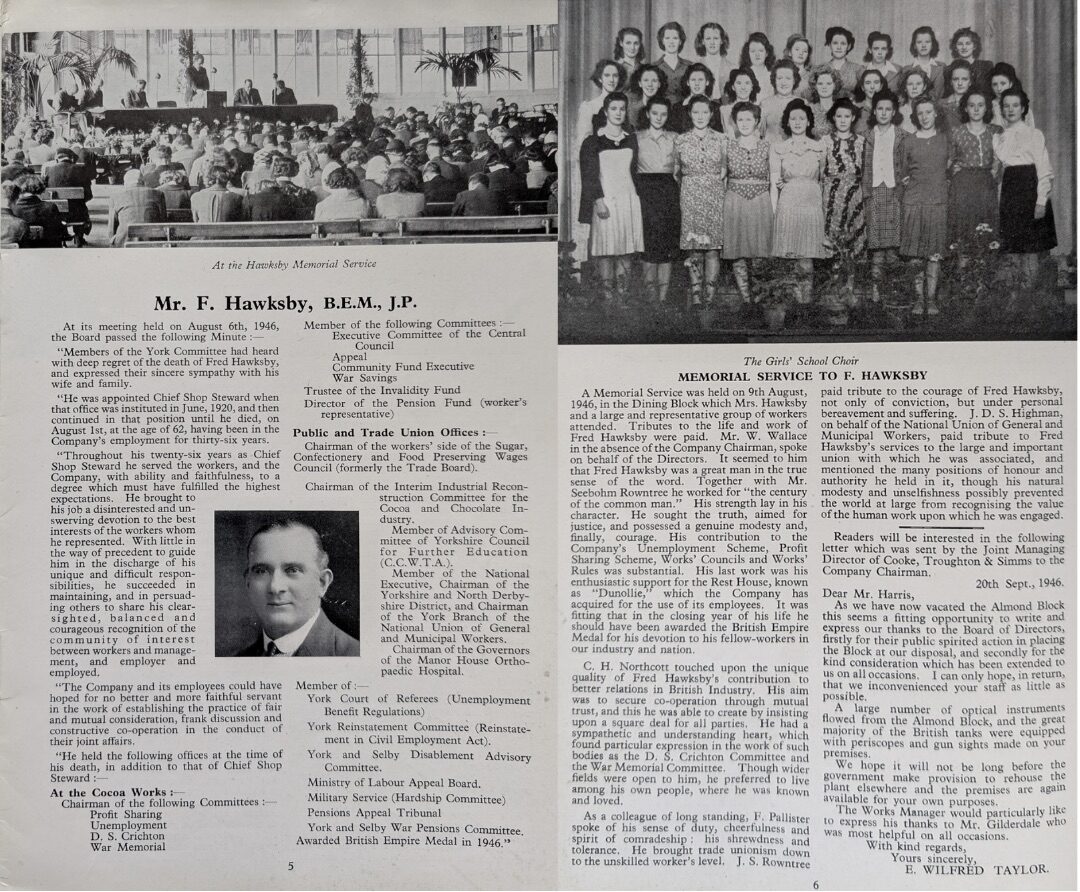
Hawksby’s memorial in the Cocoa Works Magazine Autumn 1946
This is the end of Part 3 of “Come, Let Us Reason Together”: Trade Unions at Rowntree & Co. in the 1920s. Parts 1, 2 & 4 can be found here.
We presented this research at our 2025 York Festival of Ideas event as part of the Joseph Rowntree Centenary. You can see the recording of the event here:
Researched and written by Nick Smith, Executive Director of The Rowntree Society.
Additional research by The Rowntree Society’s research volunteers, Maisie Brenchley & James Heathfield.
References & Footnotes
[1] Cocoa Works Magazine August 1920 pp.79
[2] Cocoa Works Magazine August 1920 pp.79
[3] Yorkshire Evening Post 2nd November 1921
[4] City of York Corporation Minutes 1921-1922: Explore York Archives Y/COU/1/2/39; Cocoa Works Magazine June 1923
[5] Meeting with Shilleto, Hutchinson and Two Men and Two Girls on the Subject of Hawksby, 9th November 1916: Borthwick Institute of Archives R/DP/F/11
[6] Briggs, A. 1961 A Study if the Work of Seebohm Rowntree 1871-1954 Longmans pp.107; Wallace, W. 1985 I Was Concerned pp.125-126: Borthwick Institute for Archives JRRT/8/2/54; Northcott, C. 1956 Memorandum of interview with C. H. Northcott: Borthwick Institute for Archives RFAM/BSR/JRF/11/26
[7] Briggs, A. 1961 A Study if the Work of Seebohm Rowntree 1871-1954 Longmans pp.246
[8] Northcott, C. 1956 Memorandum of interview with C. H. Northcott: Borthwick Institute for Archives RFAM/BSR/JRF/11/26
[9] Cocoa Works Magazine March 1923
[10] Cocoa Works Magazine April 1925
[11] Cocoa Works Magazine June 1925
[12] Memorandum ‘Notes on the American tour of Messrs. Northcott and Hawksby’: Borthwick Institute for Archives RFAM/BSR/JRF/5/2/1/4
[13] Cocoa Works Magazine Christmas 1926 pp.257-259
[14] Correspondence between B. S. Rowntree and Fred Hawksby 1942: Borthwick Institute for Archives JRF/RCO/7/6/2
[15] Fred Hawksby’s letter of condolence to Seebohm Rowntree 1944: Borthwick Institute for Archives RFAM/BSR/JRF/1/2/9/2
[16] Seebohm’s reply to Hawksby’s letter of condolence 1944: Borthwick Institute for Archives RFAM/BSR/JRF/1/2/9/2
[17] Cocoa Works Magazine Autumn 1946
[18] Letter of condolence by Peter Rowntree to Mrs Hawksby August 1946: Borthwick Institute for Archives JRF/RCO/6/1/10
