
“Come, Let Us Reason Together”: Trade Unions at Rowntree & Co. in the 1920s Part 4: Irene Pickup
This is part 4 of The Rowntree Society’s research into the relationship between the Rowntree family and trade unions in the 1920s. In the previous parts we explored Seebohm Rowntree’s approach to industrial relations at Rowntree & Co., how the General Strike of 1926 impacted the company, and the life of Chief Shop Steward Fred Hawksby. You can find them here. This part will tell the story of Irene Pickup, important trade unionist at Rowntree’s and their first Assistant Chief Shop Steward.
Researching Pickup
We at The Rowntree Society had already come across Irene Pickup in our research about Rowntree women (see here). We were keen to revisit this work and discover more about her life. We followed the same methodology we used for researching Fred Hawksby; consulting census and similar records, as well as documents held in the Rowntree archives at the Borthwick Institute for Archives, including issues of the Cocoa Works Magazines. This time we also ended up consulting the Trade Union Congress’s (TUC) archives and finding out about the Bryn Mawr Summer School for Women Workers in Industry held in Pennsylvania, USA. From this we were able to uncover Pickup’s remarkable life story as an award-winning trade unionist at Rowntree & Co.
Pickup’s Early Years
Irene Pickup was born in July 1897 and spent her early childhood living in a terrace house on Upper Hannover Street in the Leeman Road area of York with her parents and younger sister, Violet. Her father worked as a railway greaser, likely at the nearby carriage works. She went to St. Paul’s School in Holgate, and when she was 12 started attending Bishophill & Clementhorpe School.
However, by the 1911 census her mother had died, her sister was living with wider family members in York, and her father was lodging with a work colleague and his family in Holgate. Irene had been moved to Hull – the census records her living in a terrace house with an aunt and uncle and two cousins. She was 13 at the time of the census, and this disruption in her life following the death of her mother was likely due to the kind of poverty cycles Seebohm talks about in ‘Poverty: a study of town life’.
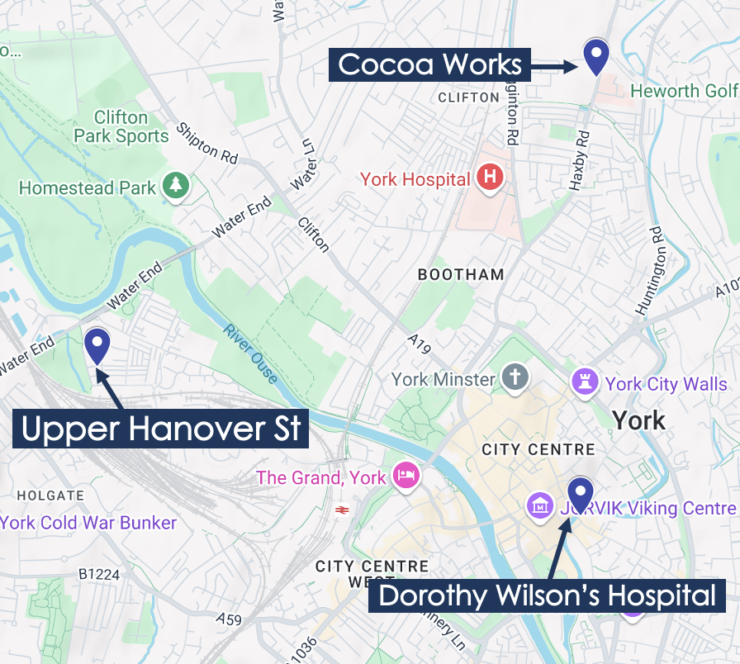 Places Irene Pickup lived and worked in York – Google Maps 8th May 2025
Irene Pickup back in York
Ten years later, Pickup appears in the 1921 census as having moved back to York. She is recorded as working at Rowntree’s and living as a lodger at Dorothy Wilson’s Hospital on Walmgate, just by the bridge over the Foss. This is notable as, at this time, Dorothy Wilson’s Hospital was an almshouse. Pickup was only 24, with the other people living there much older and described as “inmates”. She is the only person living there in the 1921 census who is described as a lodger, suggesting that her status was different to the other residents. As a single woman who never married, Pickup would likely have earned enough to cover rent but would still have faced significant legal and social barriers to renting or owning property independently. Almshouses or similar accommodation may have been among her only realistic options. She lived at Dorothy Wilson’s Hospital until around 1939, most likely in a dormitory as she is never recorded as having a room number, unlike other residents.
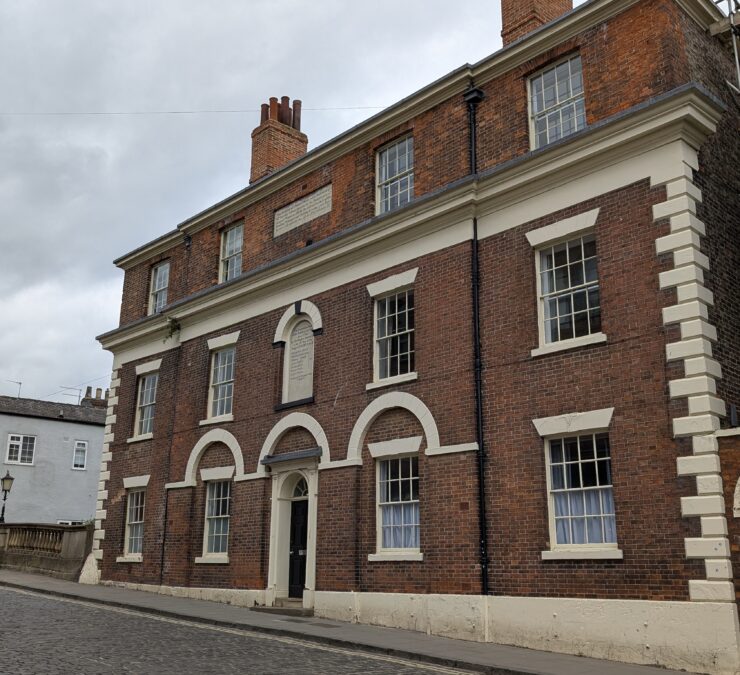 Dorothy Wilson’s Hospital building in 2025 – The Rowntree Society
At some point around 1939, Pickup’s housing situation changed. The 1939 register records Pickup as having moved into what would have been a newly built house in Holgate and living there with her by then retired father. She stayed living there until her death in 1969. In her later years, her sister Violet lived there with her. It had taken decades for the family to come back together after her mother’s death and loss of their home when she was 12 or 13.
Irene Pickup at The Cocoa Works
Pickup started working at the Cocoa Works in 1915 aged 18, initially as a chocolate piper, and then in the Almond Department where she became a Shop Steward and sat on their departmental council.[1] In 1919 she was part of the delegation from Rowntree’s to the government’s Interim Industrial Reconstruction Committee where she represented women workers in the negotiations over nationally imposed pay and working conditions.[2] Pickup must have been on the Central Works Council (CWC) by 1921 as she is cited as playing a key role in developing the Works Rules.[3] However, the first time she is mentioned in the minutes is from the 8th February 1922 meeting where she is first voted onto the CWC’s executive.[4] Alongside her work in the CWC, Pickup was a strong advocate for the education provided at the Cocoa Works. She was involved in its organisation and encouraged the women workers to engage with the education opportunities offered to them by Rowntree & Co.[5]
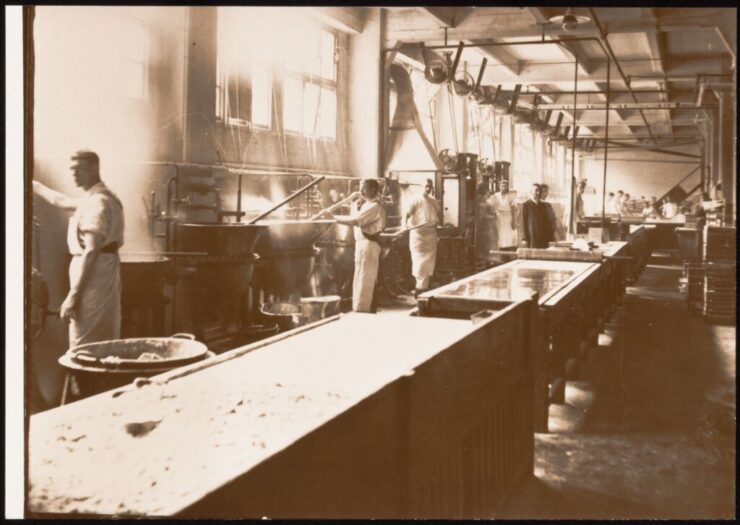 Almond Department at Rowntree’s Cocoa Works 1920 – Borthwick Institute for Archives Rowntree Photo 7/133
Although the sources we found span several decades, together they give us a sense of what Irene Pickup was like as a person and how she was regarded by those around her. In the obituary she wrote for Seebohm Rowntree following his death in 1954, Pickup said, “When I look back and recall some of the interviews I had with him, at a time when my views were much less moderate than they are now, I realise just how tolerant he was.”[6] On her retirement, the Cocoa Works Magazine stated, “Her rise from the ranks, and her keen interest in workers’ welfare, coupled with a high level of intelligence and sense of justice enabled [Pickup] to reach well-balanced views on most workroom problems, and the Management greatly regrets the loss of her unique experience and personality…”.[7] In 1952 William Wallace wrote a letter to Seebohm Rowntree discussing whether the spirit of Joseph Rowntree still existed at the Cocoa Works. In it, he describes having raised the question with Irene Pickup and concludes that “few other people are likely to be either so well informed on this subject or so willing to be frank.”[8]
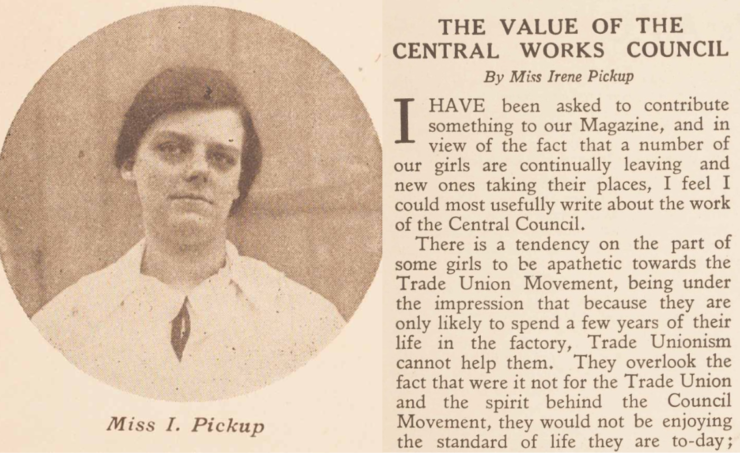 Irene Pickup and the opening an article by her in the Cocoa Works Magazine Christmas 1925
In 1925, Pickup was given the position of Assistant Chief Shop Steward working with Fred Hawksby.[9] This new position was not just to help Hawksby and cover the work in his absence, but it also meant that the women in the factory got their own chief representative. This may well have been something Seebohm recognised he needed after the incident described in part 1, where the women had rallied behind Jack Baker’s militancy.
However, unlike Hawksby, Pickup did not stay working in her paid Shop Steward role, as in 1937 she became part of the management team of the Cream Packing Department where she stayed until her retirement in 1952.[10]
International Trailblazer
In addition to her contribution to industrial relations at Rowntree’s Cocoa Works during the 1920s, Irene Pickup also became an important figure in the wider trade union movement both in Britain and internationally.
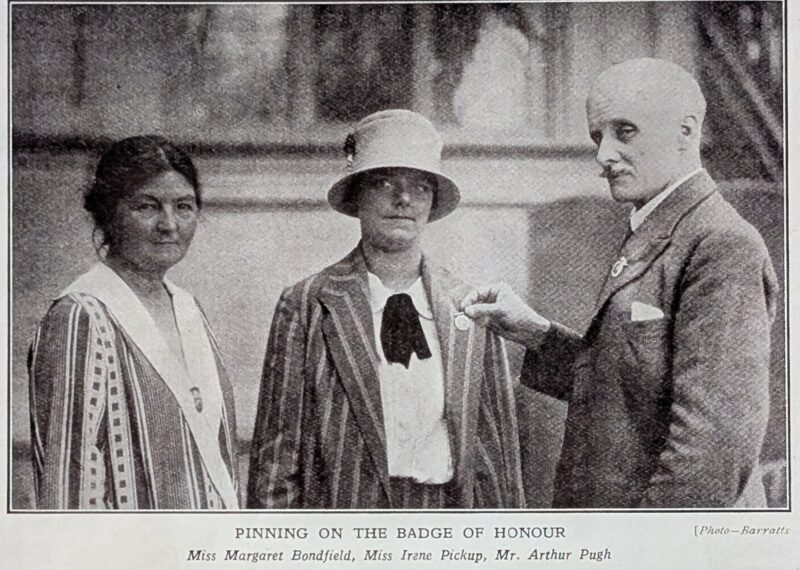
In 1926, ahead of their first women’s conference, the Trades Union Congress (TUC) set out to find the woman who had done “the best work” for trade unions in the country that year.[11] To do so, they established a set of criteria for which points were awarded up to a maximum of 100. These points were allocated for factors such as the number of years spent as a member of a trade union, number of years as a shop steward, participation in negotiations with employers, and attendance of TUC education classes.[12] Pickup achieved 77 points, more than any other nominee. She was awarded a TUC Gold Badge for the achievement at the women’s conference which was held alongside the other events of the annual congress of 1926 in Bournemouth.[13] The official report records that 85 delegates attended, representing 38 affiliated organisations, and notes as a remarkable feature the large number of women who attended as visitors – suggesting that even at a women’s conference, the majority of official delegates were men.[14]
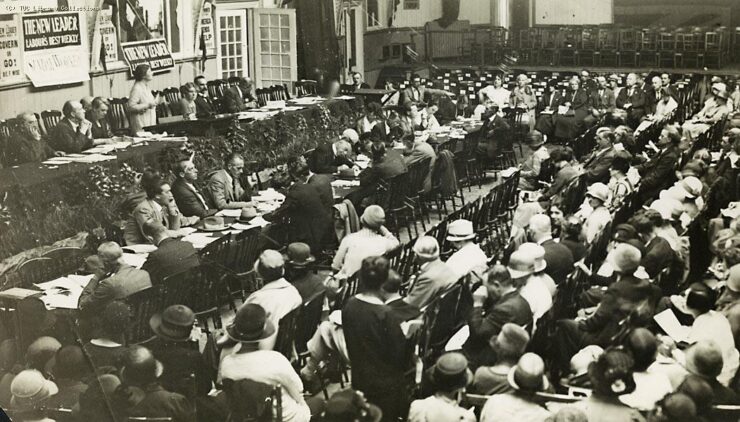 TUC Women’s Conference 1926 Bournemouth – TUC Library Collections, London Metropolitan University
Coverage in the October 1926 issue of the CWM was extensive with an editorial dedicated to Pickup receiving the award, and an article by Seebohm Rowntree introducing the new education programme, entitled “Industrial Strife and the Way Out”.[15] It also printed the speech Pickup made at the TUC’s women’s conference where she stated, “I feel it is a duty, as an ordinary rank and file member, to try and educate our women, and even our men… and I am perfectly certain that when we do that, we shall not have the ills which we have with us to-day” and “I am perfectly certain the men will have to “sit up” and take notice of the women in the future more than they done in the past.”[16]
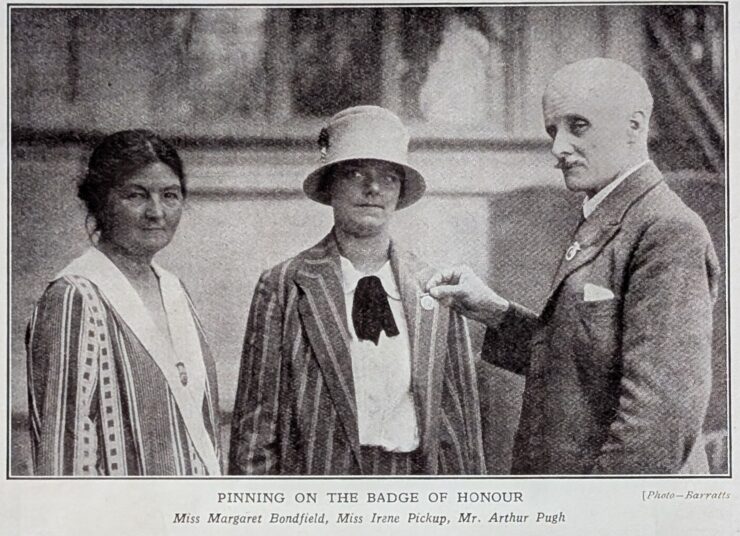 Irene Pickup receiving her award at the TUC Woman’s Conference 1926 – Cocoa Works Magazine October 1926
In 1927, Seebohm arranged for Pickup to attend the Bryn Mawr College Summer School for Women Workers in Industry.[17] Bryn Mawr College is in Pennsylvania, USA and was originally founded by Quakers. Their Summer Schools ran from 1921 to 1938 and were radical in many ways: in how they were taught, in the kind of women who attended – many like Irene did not have a university education – and in the behaviour of the students (who would instigate protests about their accommodation and join picket lines on organised outings).[18] Pickup was the first international student to attend and made such a marked contribution that they continued to fund international scholarships in the following years. The year before Pickup attended, they admitted the first African American students to the course.[19] The school’s ethos is illustrated by the fact that one of its teachers was the sociologist W.E.B. Du Bois – among the first African Americans to gain a PhD, an anti-racist campaigner, and an early thinker in what we now call de-colonialism.[20][21]
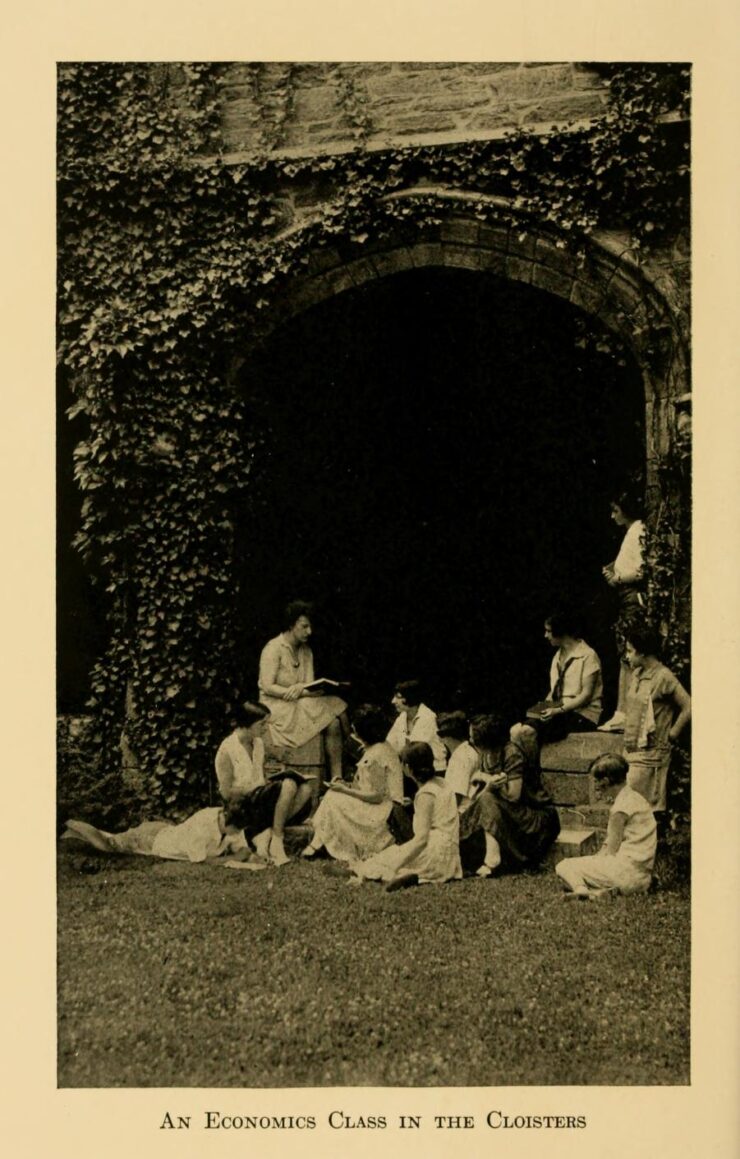 Women Workers at the Bryn Mawr Summer School – Smith, H.W. 1929 Public Domain
Irene Pickup and Seebohm Rowntree
Irene Pickup had a lot of affection for Seebohm, even if she was not as close to him as Hawksby became. In the obituary she wrote following his death in 1954, she said “we who worked with him not only glimpsed his ideals but saw them put into practice here at the Cocoa Works. But it is not only those employed here who have benefited from his life and work —his influence has been felt throughout the world. When I went to America…, I found that the people I met there knew far more about Seebohm Rowntree than some of his own employees, and I felt very proud to be a member of his staff”.[22]
Pickup’s own contribution received national recognition when she received the British Empire Medal in 1953. On her retirement in 1952, she was given a half page column in the Cocoa Works Magazine which states that her “departure has left a gap in many Cocoa Works activities”.[23] However, her death in 1969 – 17 years later – sadly only warranted a single line noting her passing.[24]
————————————————————-
This is the end of Part 4 of “Come, Let Us Reason Together”: Trade Unions at Rowntree & Co. in the 1920s. Parts 1, 2 & 3 can be found here.
————————————————————-
We presented this research at our 2025 York Festival of Ideas event as part of the Joseph Rowntree Centenary. You can see the recording of the event here:
————————————————————-
Researched and written by Nick Smith, Executive Director of The Rowntree Society.
Additional research by The Rowntree Society’s research volunteers, Maisie Brenchley & James Heathfield.
References and Footnotes
[1] Cocoa Works Magazine Summer 1952 pp.22
[2] Cocoa Works Magazine June 1921:273-4; Cocoa Works Magazine Summer 1952 pp.22
[3] Cocoa Works Magazine Summer 1952 pp.22
[4] Central Works Council Minutes 8th Feb 1922: Borthwick Institute for Archives R/WC/2/2; Cocoa Works Magazine March 1922
[5] E.g. Cocoa Works Magazine October 1926 pp.231,242
[6] Rowntree & Co. Memorial Booklet for Seebohm Rowntree: Borthwick Institute for Archives RFAM/BSR/JRF/1/12/6
[7] Cocoa Works Magazine Summer 1952 pp.22
[8] Letter from William Wallace discussing whether the ‘JR Spirit’ still prevails at the Cocoa Works: Borthwick Institute for Archives JRF/RCO/6/8
[9] Cocoa Works Magazine April 1925 pp.9; Cocoa Works Magazine Summer 1952 pp.22
[10] Cocoa Works Magazine Summer 1952 pp.22
[11] Report of Proceedings at the 58th Annual Trades Union Congress 1926 pp.64: http://www.unionhistory.info/reports/ accessed 14th April 2026
[12] Cocoa Works Magazine October 1926 pp.230
[13] Cocoa Works Magazine October 1926 pp.230; Report of Proceedings at the 58th Annual Trades Union Congress 1926 pp.64: http://www.unionhistory.info/reports/ accessed 14th April 2026
[14] Report of Proceedings at the 58th Annual Trades Union Congress 1926 pp.64: http://www.unionhistory.info/reports/ accessed 14th April 2026
[15] Cocoa Works Magazine October 1926
[16] Cocoa Works Magazine October 1926 pp.242
[17] Rowntree & Co. Memorial Booklet for Seebohm Rowntree: Borthwick Institute for Archives RFAM/BSR/JRF/1/12/6; Smith, H.W. 1929 Women Workers at the Bryn Mawr Summer School New York: American Association for Adult Education pp.222-223: https://archive.org/details/womenworkersatbr00smit accessed 14th April 2026
[18] https://en.wikipedia.org/wiki/Bryn_Mawr_Summer_School_for_Women_Workers_in_Industry accessed 14th April 2026
[19] Ard, A.K. 1992 Powerful Learning: A Study of the Bryn Mawr Summer School for Women Workers in Industry 1921-1938 ASHE Annual Meeting Paper Association for the Study of Higher Education pp.5-6: https://archive.org/details/ERIC_ED352902/ accessed 14th April 2026
[20] Hollis, K. 1994 ‘Liberating Voices: Autobiographical Writing at the Bryn Mawr Summer School for Women Workers, 1921-1938’ College Composition and Communication 45(1):31–60
[21] For more on the Bryn Mawr Summer School: its official history published in 1929 and two documentary films made about it in the 1980s are available online via the Internet Archive website
[22] Rowntree & Co. Memorial Booklet for Seebohm Rowntree: Borthwick Institute for Archives RFAM/BSR/JRF/1/12/6
[23] Cocoa Works Magazine Summer 1952 pp.22
[24] Cocoa Works Magazine Spring 1969 pp.39