Joseph Rowntree: 1836 – 1925
Philanthropist; progressive employer; radical thinker; social innovator: “he loved to do good by stealth”
Images: From originals held at The Borthwick Institute for Archives.


Philanthropist; progressive employer; radical thinker; social innovator: “he loved to do good by stealth”
Images: From originals held at The Borthwick Institute for Archives.
Our work is enabled by grant funding from the Joseph Rowntree Foundation, the Joseph Rowntree Charitable Trust, and the Joseph Rowntree Reform Trust. If you would like to make a financial donation to further support our work, it is easy to pay online (with or without Gift Aid) by clicking the link below. You can get in touch with us about other ways of giving via info@rowntreesociety.org.uk
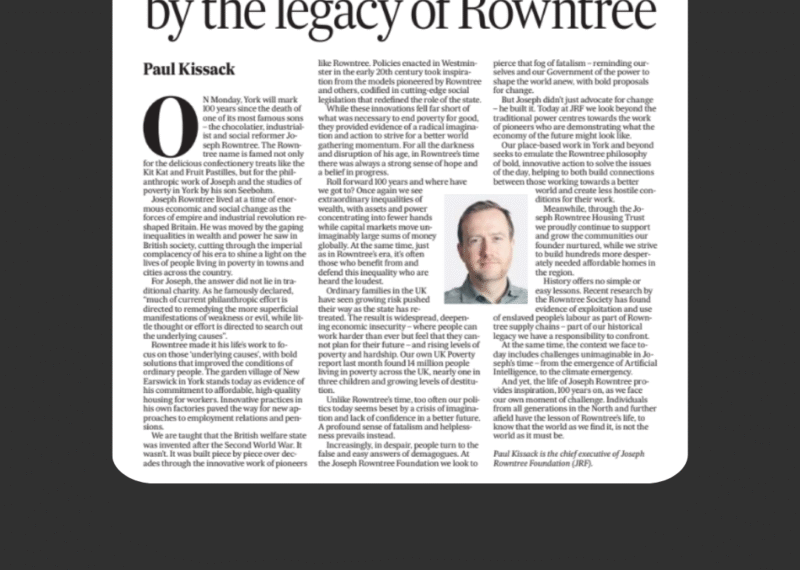
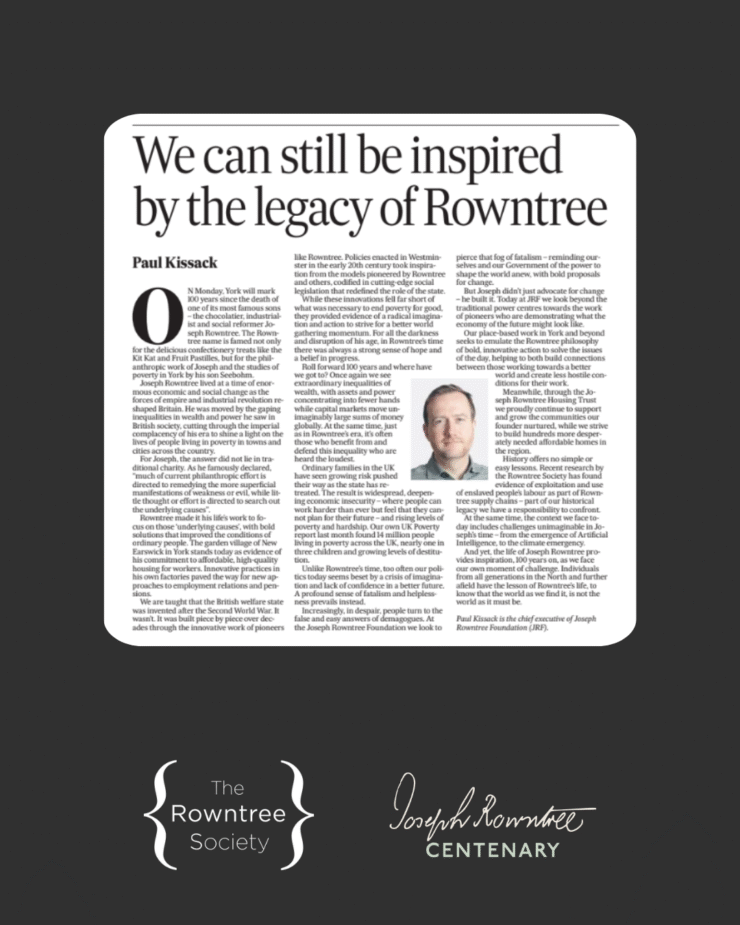
The Rowntree trusts – the Joseph Rowntree Foundation (JRF); the Joseph Rowntree Charitable Trust (JRCT) and the Joseph Rowntree Reform Trust (JRRT) – are perhaps Joseph’s greatest legacy and certainly the most visible aspect of his philanthropic activities here in the 21st century.
The Rowntree name as a chocolate and confectionery manufacturer is now starting to fade from public memory but the trusts still continue their work to effect social change. In his Founder’s Memorandum Joseph postulated a longevity of 35 years for the JRCT and JRRT stating that “If the enormous volume of the philanthropy of the present day were wisely directed it would, I believe, in the course of a few years, change the face of England.”
Many things have changed for the better since these words were written in 1904 but there is still work to do and all three Trusts continue their mission and take their inspiration from Joseph Rowntree.
Our work is enabled by grant funding from the Joseph Rowntree Foundation, the Joseph Rowntree Charitable Trust, and the Joseph Rowntree Reform Trust. If you would like to make a financial donation to further support our work, it is easy to pay online (with or without Gift Aid) by clicking the link below. You can get in touch with us about other ways of giving via info@rowntreesociety.org.uk
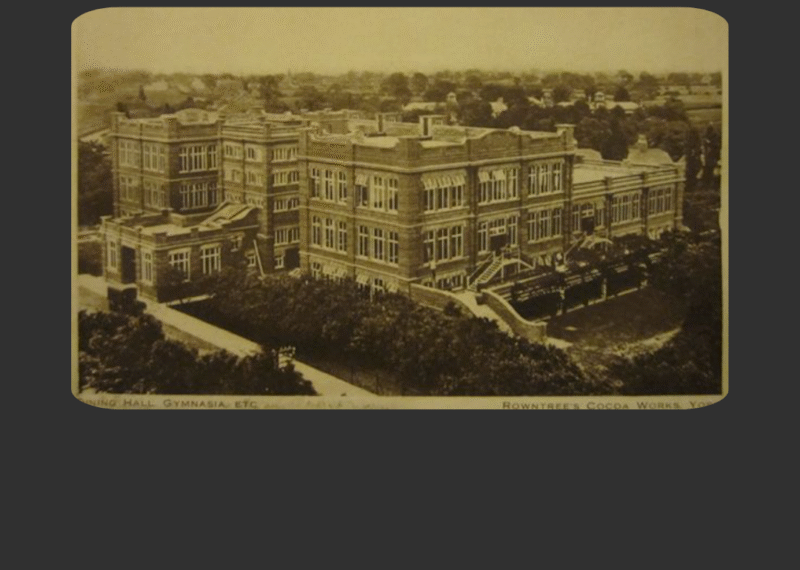
Perhaps one of the lesser known but nonetheless significant parts of the Rowntree legacy is their interest in design and architecture. The enduring built environment they pioneered in York survives in something like its original state – New Earswick; Yearsley Swimming Baths; Joseph Rowntree Theatre; Joseph Rowntree Memorial Library; Rowntree Park; The Homestead and some parts of the Haxby Road factory all continue to form tangible evidence of enduring good design. Seebohm Rowntree was a one time president of the Design and Industries Association.

Our work is enabled by grant funding from the Joseph Rowntree Foundation, the Joseph Rowntree Charitable Trust, and the Joseph Rowntree Reform Trust. If you would like to make a financial donation to further support our work, it is easy to pay online (with or without Gift Aid) by clicking the link below. You can get in touch with us about other ways of giving via info@rowntreesociety.org.uk
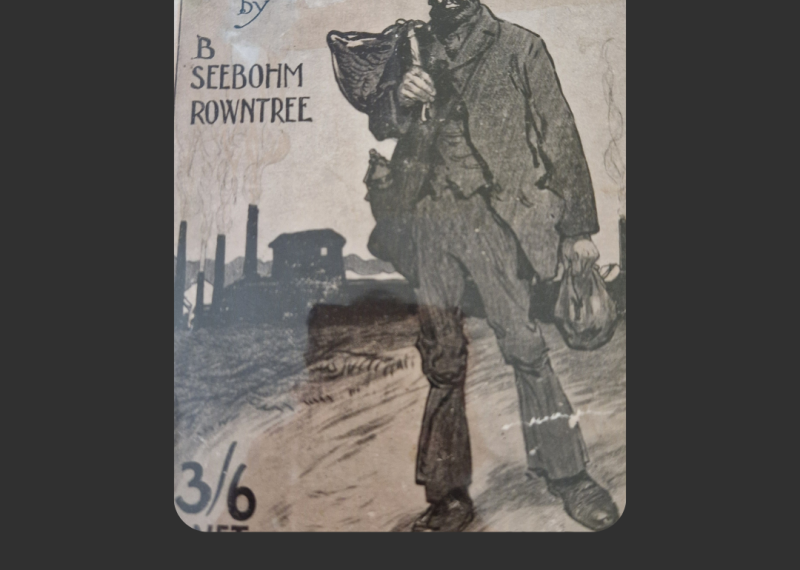
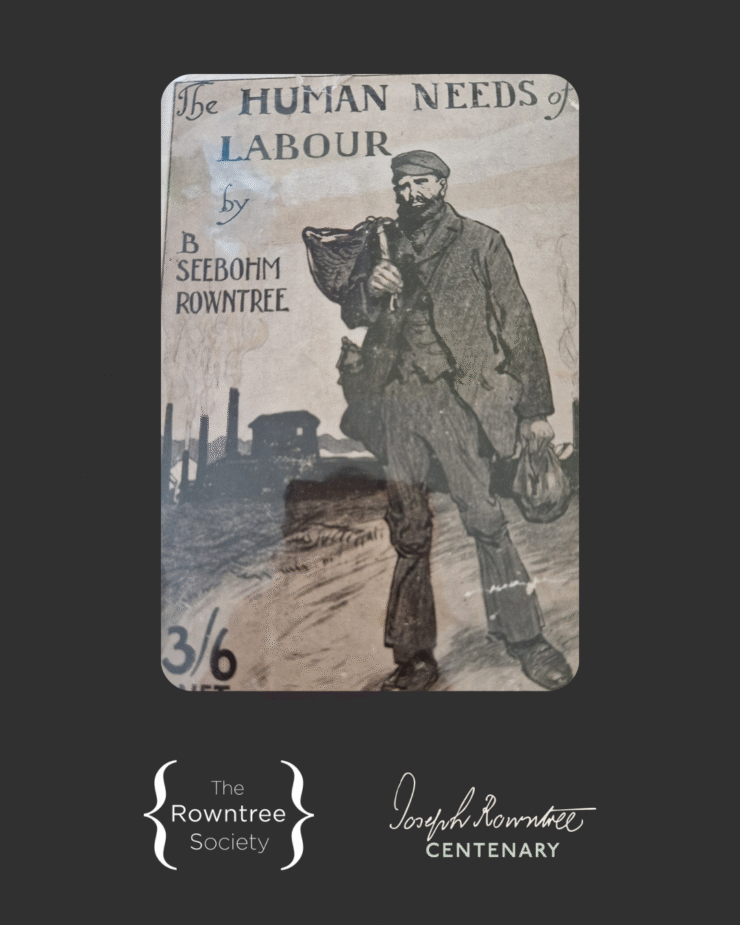
In the concluding months of the First World War Seebohm Rowntree was writing the introduction to his book The Human Needs of Labour: “I do not believe for a moment that in the future we shall allow millions of our fellow-countrymen, through no fault of their own, to pass through life ill-housed, ill-clothed, ill-fed, ill educated. But if their conditions are to be remedied, the present scale of wages for unskilled labourers must be materially raised.” He was advocating for a national minimum wage. Seebohm’s writing was hugely influential and he became an adviser to Prime Minister David Lloyd George and contributed to the Beveridge Report which led to the founding of the Welfare State following the Second World War. The Joseph Rowntree Reform Trust has been committed to political reform from its inception and contributed to the climate of opinion that led to the formation of the Welfare State. Low Pay and the Liveable Wage are still the subject of lively political debate today.
Our work is enabled by grant funding from the Joseph Rowntree Foundation, the Joseph Rowntree Charitable Trust, and the Joseph Rowntree Reform Trust. If you would like to make a financial donation to further support our work, it is easy to pay online (with or without Gift Aid) by clicking the link below. You can get in touch with us about other ways of giving via info@rowntreesociety.org.uk
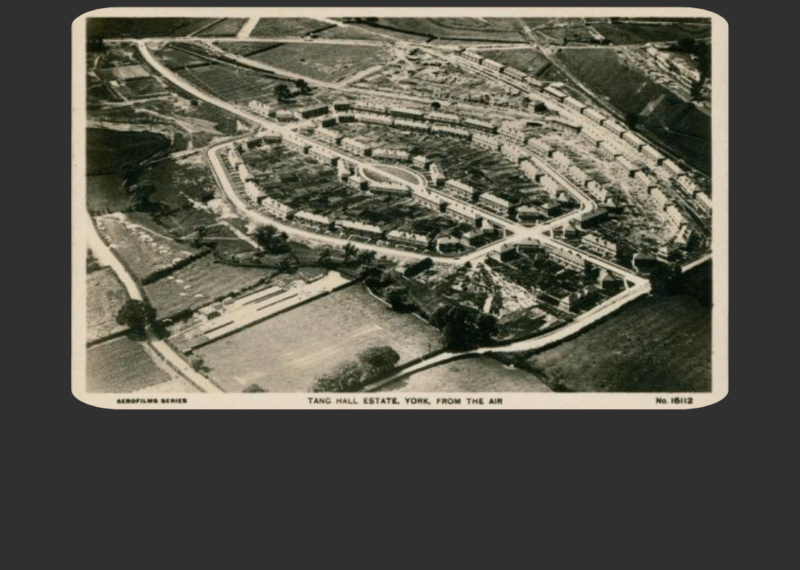
Slum clearance, a major focus of Quaker attention during the nineteenth century, was a key driver in Joseph’s vision for New Earswick. He wanted working people to have improved and affordable housing with access to green spaces and community facilities.
This pioneering garden village design influenced directly the layout of the Tang Hall public housing estate in York built during the 1920s, making it one of the oldest council estates in the country. Although the modern housing debate has moved on from large scale provision of public housing the need for adequate sustainable housing and continual improvement to meet modern living standards remains a very live issue. The Joseph Rowntree Housing Trust continues to be driven by Joseph’s vision.
Image: Giles Cookson

Our work is enabled by grant funding from the Joseph Rowntree Foundation, the Joseph Rowntree Charitable Trust, and the Joseph Rowntree Reform Trust. If you would like to make a financial donation to further support our work, it is easy to pay online (with or without Gift Aid) by clicking the link below. You can get in touch with us about other ways of giving via info@rowntreesociety.org.uk
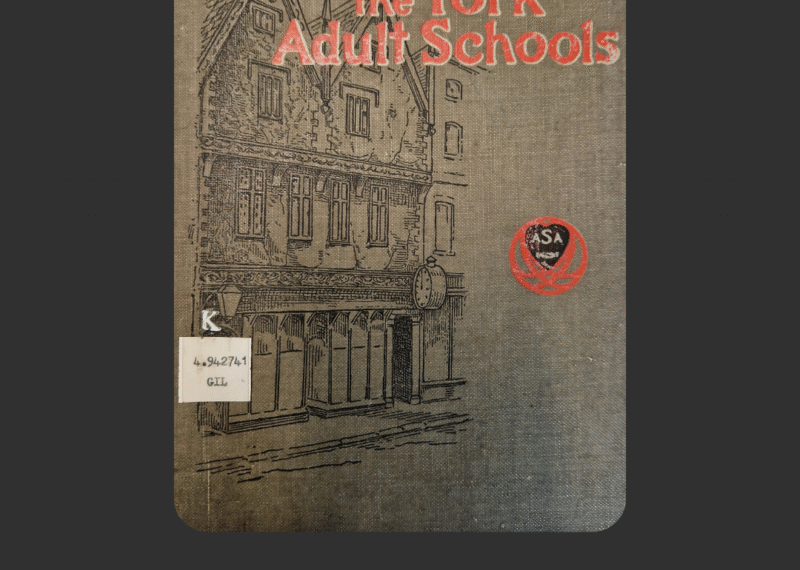
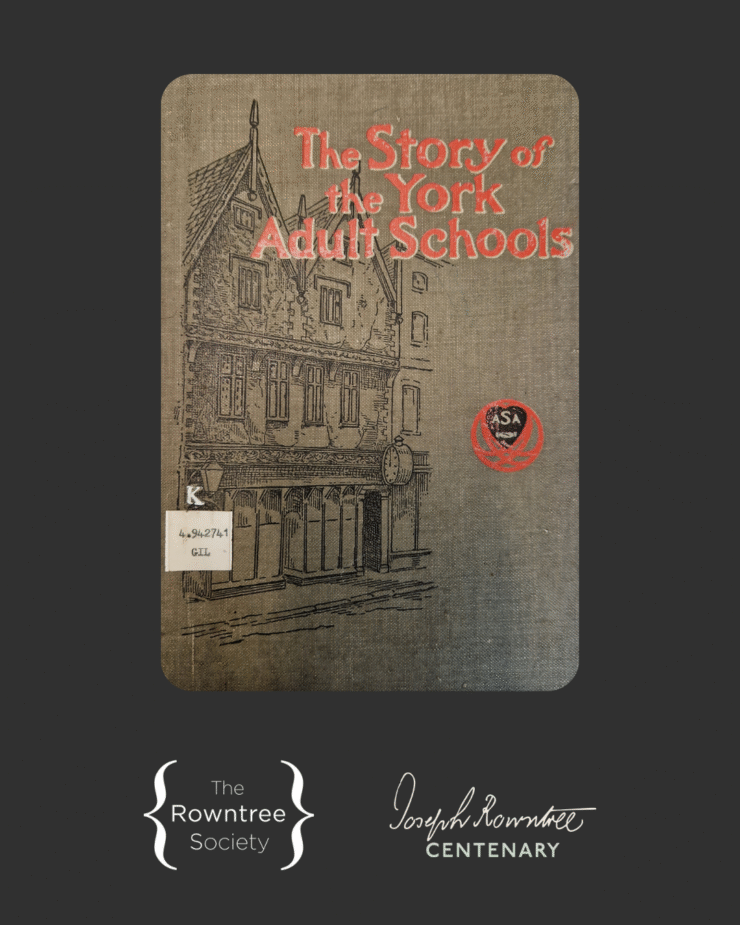
The promotion of adult education was a passionate interest of Joseph and one to which he devoted himself throughout his life. The Adult School movement and the Rowntree contribution to it is a key part of their legacy. Joseph wrote the introduction to The Story of York Adult Schools by F J Gillman in 1907.
Towards the end of his life, Joseph also supported the Educational Settlements Association, founded in 1920. The settlements had wider ambitions than adult schools and, from a Rowntree perspective, their aim was to provide political, social and civic education for newly enfranchised members of the working classes.
The Joseph Rowntree Charitable Trust gave substantial financial backing to this movement in the forty years after 1909 when Arnold Rowntree helped to create two settlements in York and Leeds. Education as a process of ‘lifelong learning’ is a current issue today in a fast moving world where skills need to be continually updated.
Our work is enabled by grant funding from the Joseph Rowntree Foundation, the Joseph Rowntree Charitable Trust, and the Joseph Rowntree Reform Trust. If you would like to make a financial donation to further support our work, it is easy to pay online (with or without Gift Aid) by clicking the link below. You can get in touch with us about other ways of giving via info@rowntreesociety.org.uk
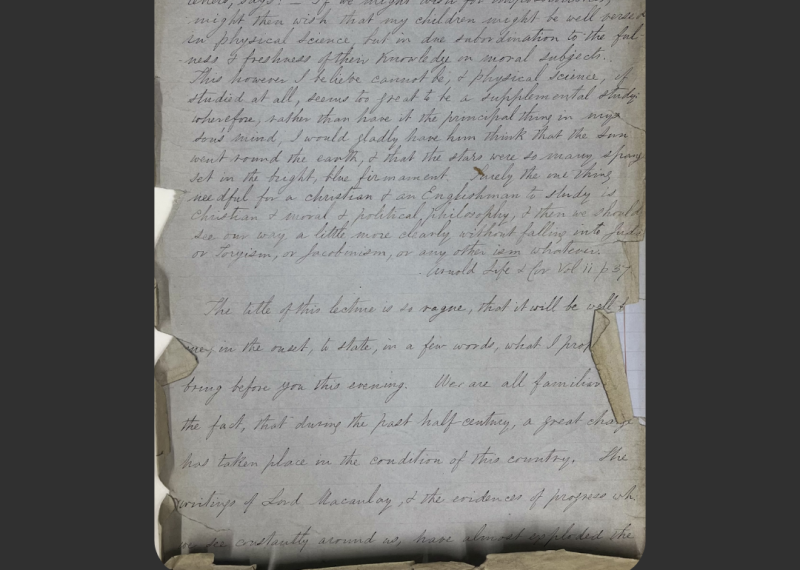
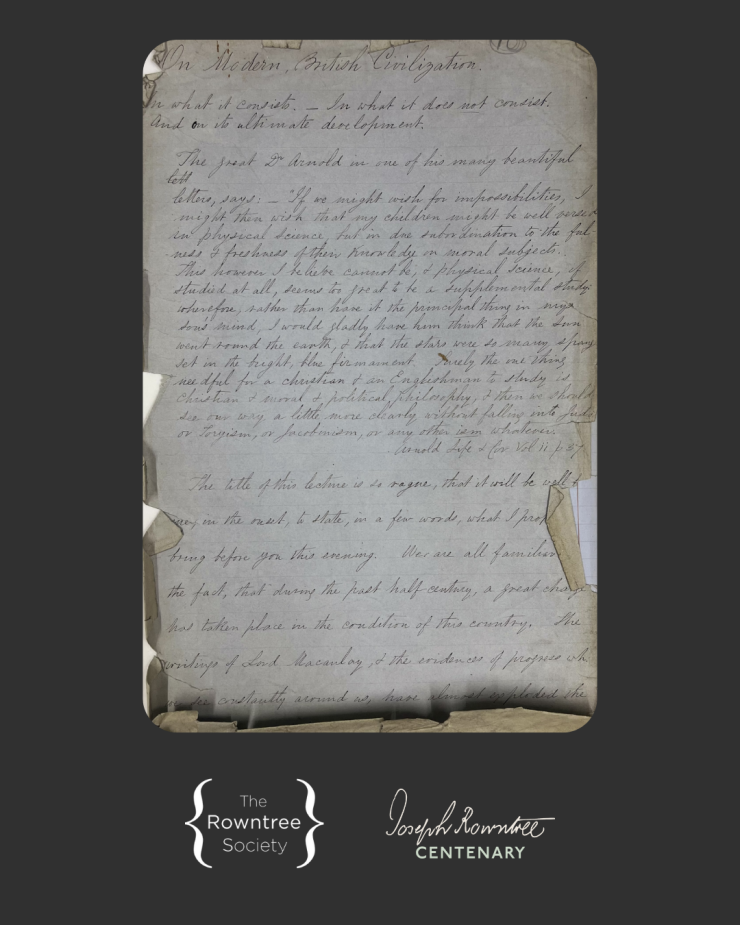
Joseph undertook detailed analysis of poverty in England from the 1860s, carefully gathering statistics on public spending, development of the poor laws, crime and literacy to inform his essay On Modern British Civilisation: In what it consists. And in what it does not consist. This essay is an example of Joseph’s forthright and radical views at this point in his life. Some of his essays had to be toned down before they could be shared with Quaker brethen – one of J Storrs Fry’s (Bristol chocolatier and fellow member of the Society of Friends) letters to Joseph in 1863 provides an example of advice on this point. Joseph’s analysis of statistical evidence was adopted by his son Seebohm who shared his father’s desire to identify and address the root causes of poverty and it was he who firmly established the concept of the poverty cycle through his extensive research and writing on this issue. Poverty and the impact of poverty continue to be very real social and political issues today. The Joseph Rowntree Foundation continues to work to resolve poverty.
Our work is enabled by grant funding from the Joseph Rowntree Foundation, the Joseph Rowntree Charitable Trust, and the Joseph Rowntree Reform Trust. If you would like to make a financial donation to further support our work, it is easy to pay online (with or without Gift Aid) by clicking the link below. You can get in touch with us about other ways of giving via info@rowntreesociety.org.uk
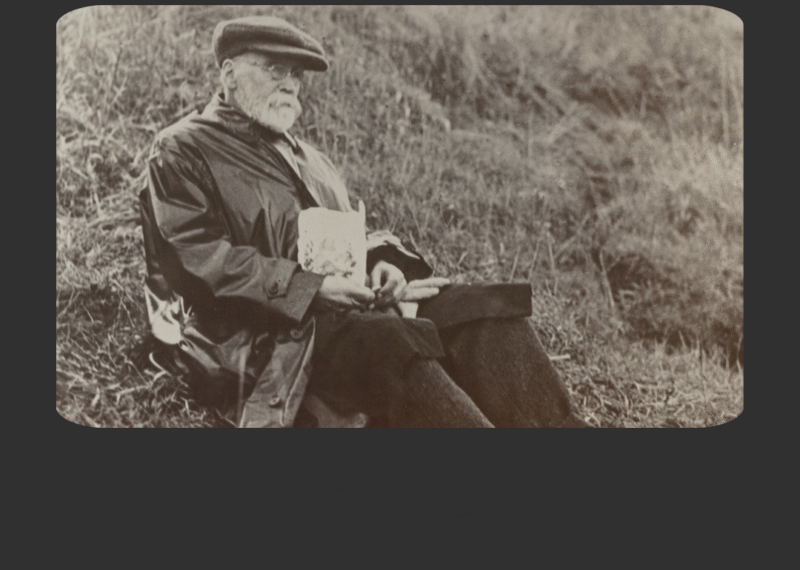
Joseph’s legacy and influence live on. When Yorkshire Evening Press readers were asked to choose their citizens of the millennium in 2000, Joseph Rowntree’s name topped the list.

Our work is enabled by grant funding from the Joseph Rowntree Foundation, the Joseph Rowntree Charitable Trust, and the Joseph Rowntree Reform Trust. If you would like to make a financial donation to further support our work, it is easy to pay online (with or without Gift Aid) by clicking the link below. You can get in touch with us about other ways of giving via info@rowntreesociety.org.uk
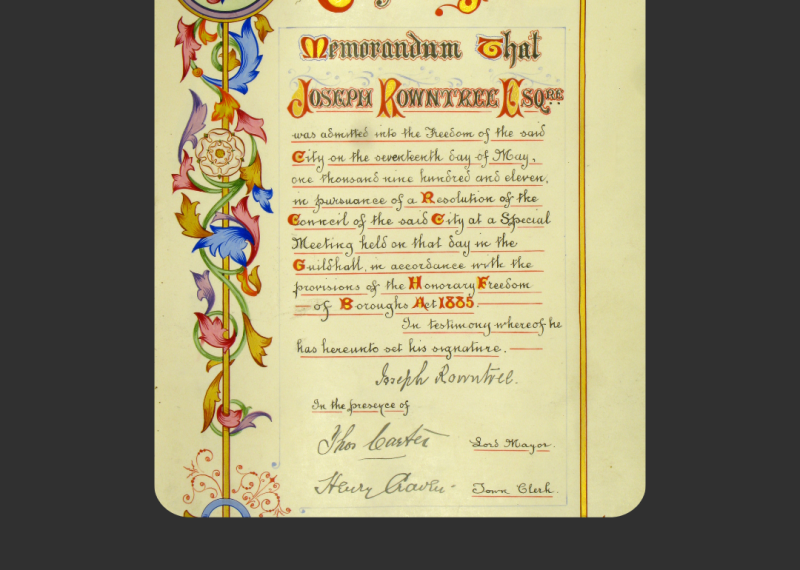
In May 1911, York conferred the Freedom of the City on Joseph. This was the highest honour within its power and recognised Joseph’s contribution to the city as an industrialist, reformer and public servant. Ever the campaigner, Joseph took the opportunity at the end of his speech to remind those present that poverty and destitution were still a depressing reality for many working class families in York.

Our work is enabled by grant funding from the Joseph Rowntree Foundation, the Joseph Rowntree Charitable Trust, and the Joseph Rowntree Reform Trust. If you would like to make a financial donation to further support our work, it is easy to pay online (with or without Gift Aid) by clicking the link below. You can get in touch with us about other ways of giving via info@rowntreesociety.org.uk

Joseph gave lifelong service to The Retreat, a hospital created by William Tuke and pioneering in its approach to mental health. Joseph was appointed a member of the Committee of Management in 1863, retiring in 1905 after 42 years of service. “It was his constant aim and endeavour to maintain the historical reputation of the Retreat as a Hospital for the most enlightened treatment for those suffering from mental illness.” Extract from the Minute of the Retreat Committee on Joseph’s death.
Our work is enabled by grant funding from the Joseph Rowntree Foundation, the Joseph Rowntree Charitable Trust, and the Joseph Rowntree Reform Trust. If you would like to make a financial donation to further support our work, it is easy to pay online (with or without Gift Aid) by clicking the link below. You can get in touch with us about other ways of giving via info@rowntreesociety.org.uk