Joseph Rowntree: 1836 – 1925
Philanthropist; progressive employer; radical thinker; social innovator: “he loved to do good by stealth”
Images: From originals held at The Borthwick Institute for Archives.


Philanthropist; progressive employer; radical thinker; social innovator: “he loved to do good by stealth”
Images: From originals held at The Borthwick Institute for Archives.
Our work is enabled by grant funding from the Joseph Rowntree Foundation, the Joseph Rowntree Charitable Trust, and the Joseph Rowntree Reform Trust. If you would like to make a financial donation to further support our work, it is easy to pay online (with or without Gift Aid) by clicking the link below. You can get in touch with us about other ways of giving via info@rowntreesociety.org.uk

The Rowntrees’ Quaker faith emphasised quiet service, public responsibility, civic pride, pragmatism and trustworthiness. Rowntrees played a leading role in shaping the character of York Quakerism, which developed a liberal reforming strand within the national tradition. Their faith also inspired their philanthropic and civic activities both in York and beyond inspiring them to undertake useful work and to strive to improve the lot of their fellow men and women.

Our work is enabled by grant funding from the Joseph Rowntree Foundation, the Joseph Rowntree Charitable Trust, and the Joseph Rowntree Reform Trust. If you would like to make a financial donation to further support our work, it is easy to pay online (with or without Gift Aid) by clicking the link below. You can get in touch with us about other ways of giving via info@rowntreesociety.org.uk
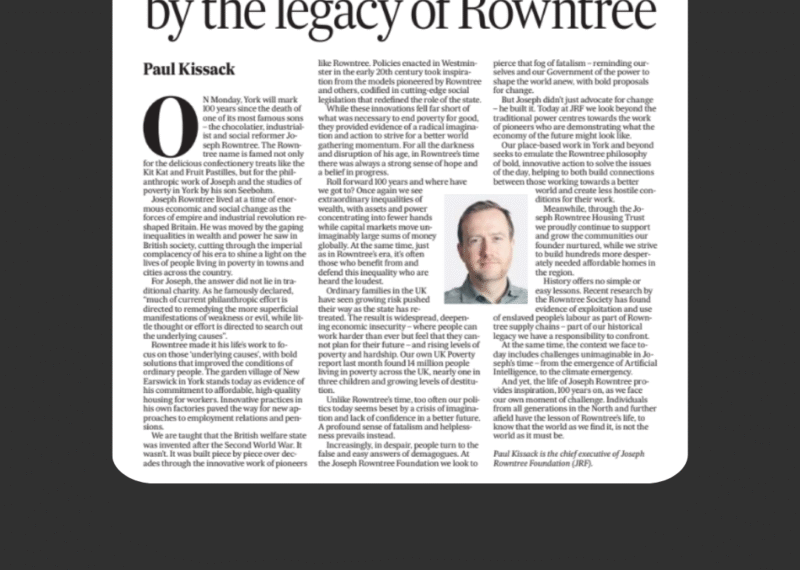
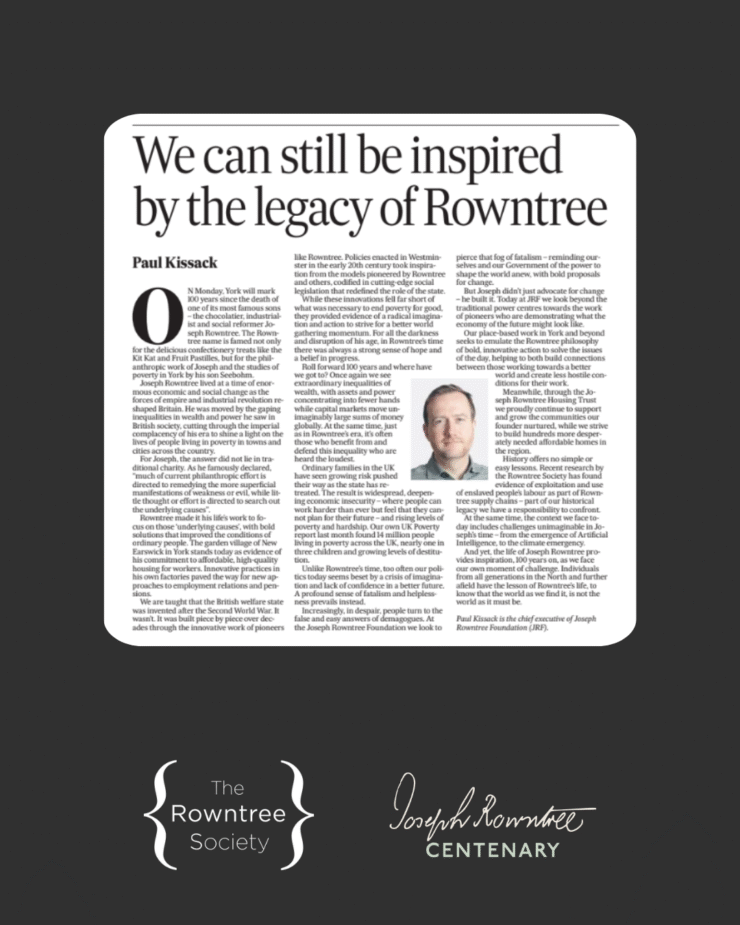
The Rowntree trusts – the Joseph Rowntree Foundation (JRF); the Joseph Rowntree Charitable Trust (JRCT) and the Joseph Rowntree Reform Trust (JRRT) – are perhaps Joseph’s greatest legacy and certainly the most visible aspect of his philanthropic activities here in the 21st century.
The Rowntree name as a chocolate and confectionery manufacturer is now starting to fade from public memory but the trusts still continue their work to effect social change. In his Founder’s Memorandum Joseph postulated a longevity of 35 years for the JRCT and JRRT stating that “If the enormous volume of the philanthropy of the present day were wisely directed it would, I believe, in the course of a few years, change the face of England.”
Many things have changed for the better since these words were written in 1904 but there is still work to do and all three Trusts continue their mission and take their inspiration from Joseph Rowntree.
Our work is enabled by grant funding from the Joseph Rowntree Foundation, the Joseph Rowntree Charitable Trust, and the Joseph Rowntree Reform Trust. If you would like to make a financial donation to further support our work, it is easy to pay online (with or without Gift Aid) by clicking the link below. You can get in touch with us about other ways of giving via info@rowntreesociety.org.uk
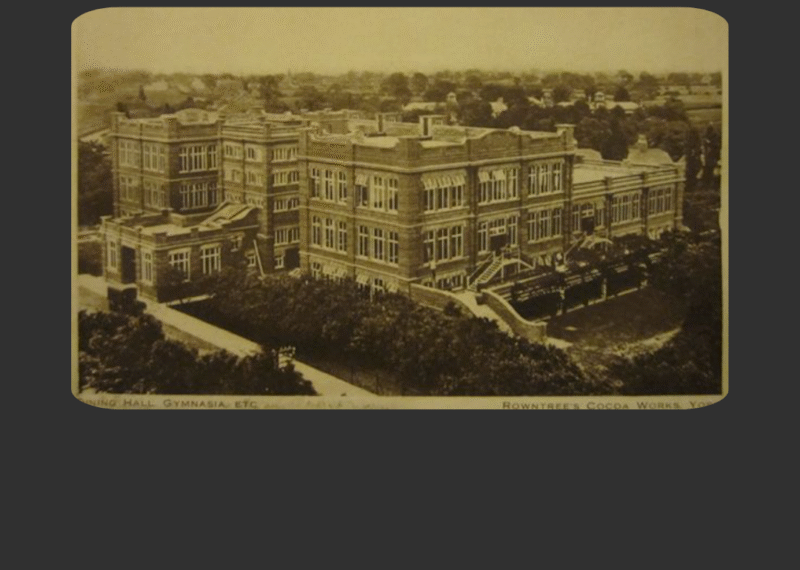
Perhaps one of the lesser known but nonetheless significant parts of the Rowntree legacy is their interest in design and architecture. The enduring built environment they pioneered in York survives in something like its original state – New Earswick; Yearsley Swimming Baths; Joseph Rowntree Theatre; Joseph Rowntree Memorial Library; Rowntree Park; The Homestead and some parts of the Haxby Road factory all continue to form tangible evidence of enduring good design. Seebohm Rowntree was a one time president of the Design and Industries Association.

Our work is enabled by grant funding from the Joseph Rowntree Foundation, the Joseph Rowntree Charitable Trust, and the Joseph Rowntree Reform Trust. If you would like to make a financial donation to further support our work, it is easy to pay online (with or without Gift Aid) by clicking the link below. You can get in touch with us about other ways of giving via info@rowntreesociety.org.uk
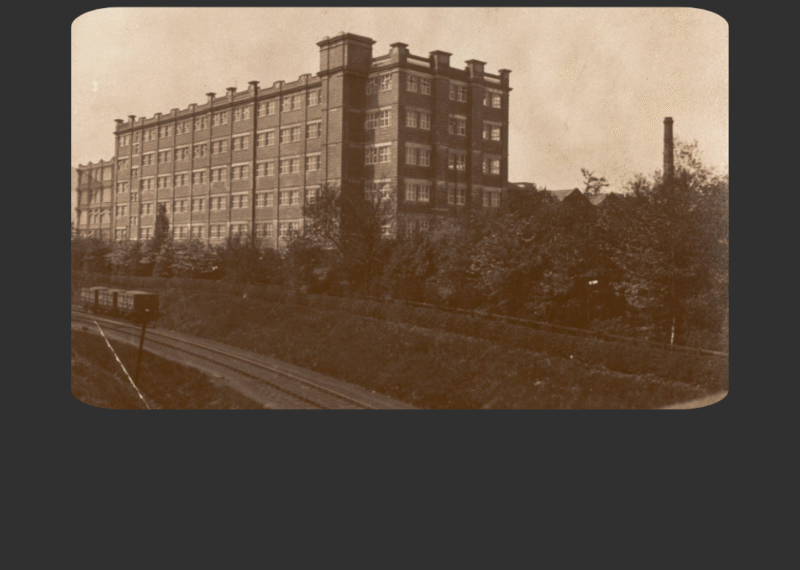
York today might not be the same city without the Rowntree presence. The growth of the confectionery business was one of the catalysts for the city’s development from workshop based manufacturing to large factories, of which the Cocoa Works was a state of the art example.
Together with its subsidiary buildings and railway siding the factory complex was almost a small town in its own right. Alongside York’s growing identity as a railway town during the nineteenth century and fellow York based confectioners, Terrys and Cravens, today’s city has been indelibly shaped by chocolate and the railways.
Image: From originals held at The Borthwick Institute for Archives.

Our work is enabled by grant funding from the Joseph Rowntree Foundation, the Joseph Rowntree Charitable Trust, and the Joseph Rowntree Reform Trust. If you would like to make a financial donation to further support our work, it is easy to pay online (with or without Gift Aid) by clicking the link below. You can get in touch with us about other ways of giving via info@rowntreesociety.org.uk
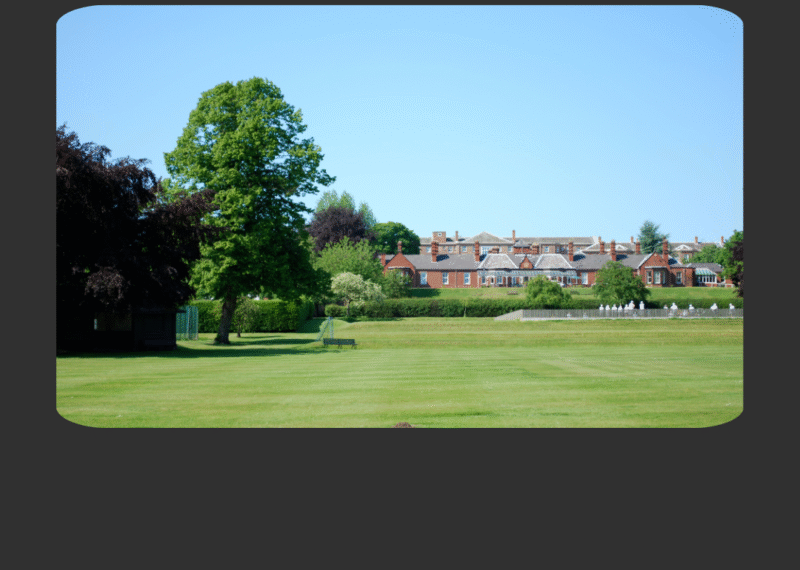
Joseph gave lifelong service to The Retreat, a hospital created by William Tuke and pioneering in its approach to mental health. Joseph was appointed a member of the Committee of Management in 1863, retiring in 1905 after 42 years of service. “It was his constant aim and endeavour to maintain the historical reputation of the Retreat as a Hospital for the most enlightened treatment for those suffering from mental illness.” Extract from the Minute of the Retreat Committee on Joseph’s death.
Our work is enabled by grant funding from the Joseph Rowntree Foundation, the Joseph Rowntree Charitable Trust, and the Joseph Rowntree Reform Trust. If you would like to make a financial donation to further support our work, it is easy to pay online (with or without Gift Aid) by clicking the link below. You can get in touch with us about other ways of giving via info@rowntreesociety.org.uk
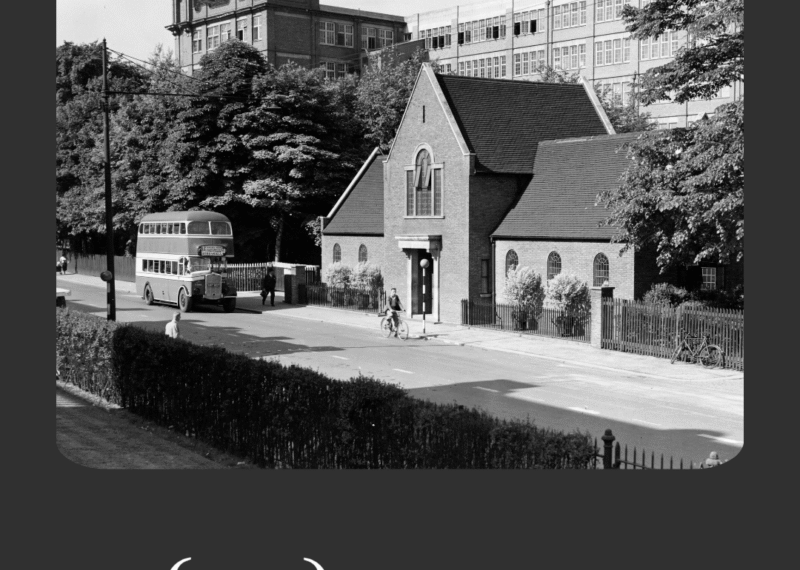
Joseph started a library for employees in 1885 believing it was important for people to use their leisure time in a positive and creative way. He had a lifelong love of books, read extensively throughout his life and liked to discuss books with his children and encourage them to read. The development of a staff library was the first step towards the creation of a large number of clubs and societies to support staff in education and well-being. Joseph also helped to create York City Library, now York Explore Library and Archive with branches across the city. It is a fitting memorial to Joseph that the Joseph Rowntree Memorial Library was built at the Cocoa Works, opening in 1927 and housing over 10,000 books. The library was designed by Colin Rowntree, son of Fred, and is an Arts and Crafts building which retains a large number of fixtures and fittings of high quality.
Image: York Explore
Our work is enabled by grant funding from the Joseph Rowntree Foundation, the Joseph Rowntree Charitable Trust, and the Joseph Rowntree Reform Trust. If you would like to make a financial donation to further support our work, it is easy to pay online (with or without Gift Aid) by clicking the link below. You can get in touch with us about other ways of giving via info@rowntreesociety.org.uk
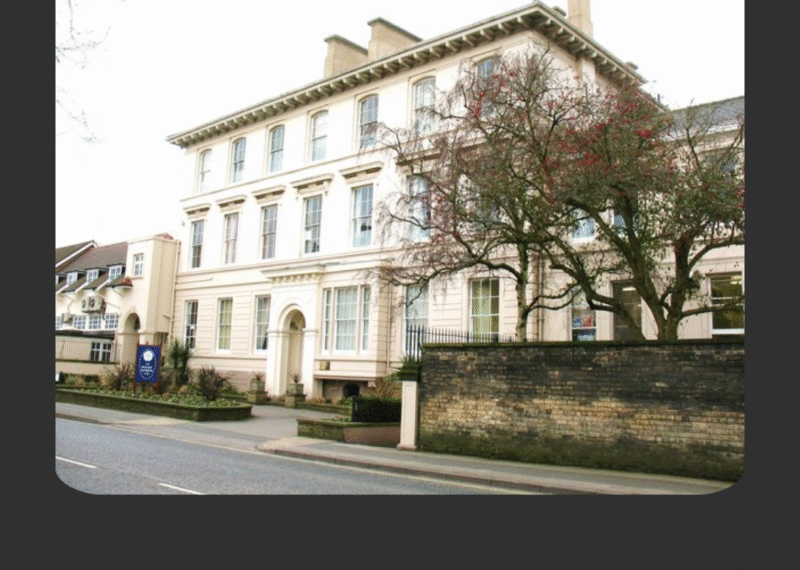
The Friends’ Girls school was first established in 1785 by prominent Quakers, Esther and William Tuke, who wanted to provide a good quality education for Quaker children. The school moved to The Mount – where it remains to this day – in 1857. Pupils have included the daughters of many leading Quaker families including the Tukes, Cadburys and Rowntrees. Both Jean Rowntree and her sister, Tony, were pupils.

Our work is enabled by grant funding from the Joseph Rowntree Foundation, the Joseph Rowntree Charitable Trust, and the Joseph Rowntree Reform Trust. If you would like to make a financial donation to further support our work, it is easy to pay online (with or without Gift Aid) by clicking the link below. You can get in touch with us about other ways of giving via info@rowntreesociety.org.uk
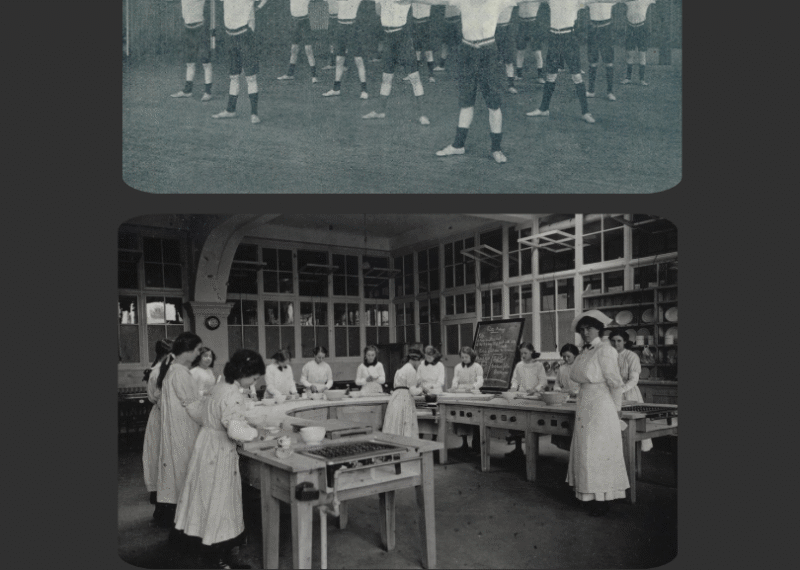
Joseph’s belief in the importance of education extended to his employees. The formal education of young women and men ended at the age of 14 when they would go out to work but Joseph believed that they should continue to receive some education after this time. In 1913 spacious schoolrooms and gymnasia were opened in a large building opposite the factory and compulsory classes arranged for young employees of both sexes in factory hours including maths, English and physical fitness.
Image: From originals held at the Borthwick Institute for Archives.

Our work is enabled by grant funding from the Joseph Rowntree Foundation, the Joseph Rowntree Charitable Trust, and the Joseph Rowntree Reform Trust. If you would like to make a financial donation to further support our work, it is easy to pay online (with or without Gift Aid) by clicking the link below. You can get in touch with us about other ways of giving via info@rowntreesociety.org.uk

Clifton Lodge House was built in 1852 and is where Joseph lived for the last years of his life from 1905 to 1925 and where he died. He built the adjoining house – Rawcliffe Holt – in 1907 for his daughter, Winifred, and her husband, Arthur Duncan Naish. After Joseph’s death both properties were left to the Rowntree trusts. Clifton Lodge was sold into private hands in 2011.
Image: From originals held at the Borthwick Institute for Archives.

Our work is enabled by grant funding from the Joseph Rowntree Foundation, the Joseph Rowntree Charitable Trust, and the Joseph Rowntree Reform Trust. If you would like to make a financial donation to further support our work, it is easy to pay online (with or without Gift Aid) by clicking the link below. You can get in touch with us about other ways of giving via info@rowntreesociety.org.uk