8 hour day and 5 day working week

Seebohm Rowntree became the company’s first director of labour and developed his father’s belief that improved worker welfare constituted a moral good into a methodology for promoting greater industrial efficiency. An eight hour day was introduced in 1896 and a five day (44 hour) working week in 1919.


Support Us

Our work is enabled by grant funding from the Joseph Rowntree Foundation, the Joseph Rowntree Charitable Trust, and the Joseph Rowntree Reform Trust. If you would like to make a financial donation to further support our work, it is easy to pay online (with or without Gift Aid) by clicking the link below. You can get in touch with us about other ways of giving via info@rowntreesociety.org.uk

Donate

Liveable Wage

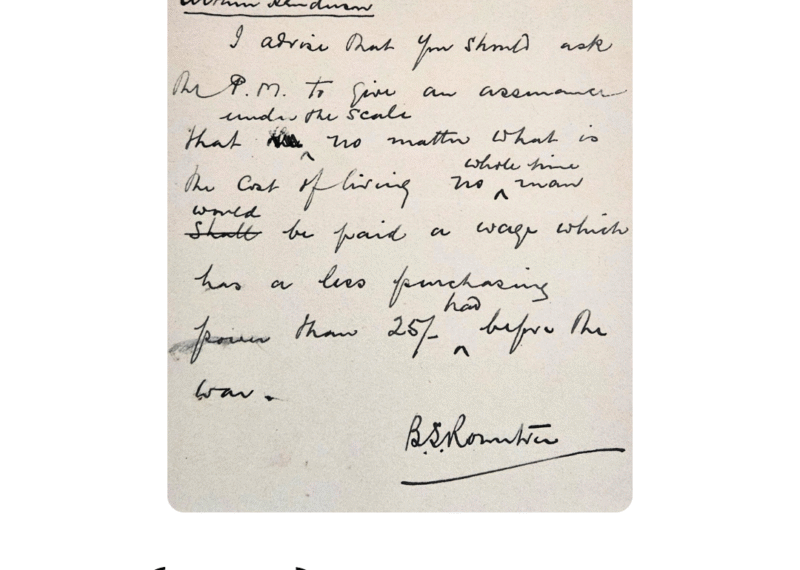
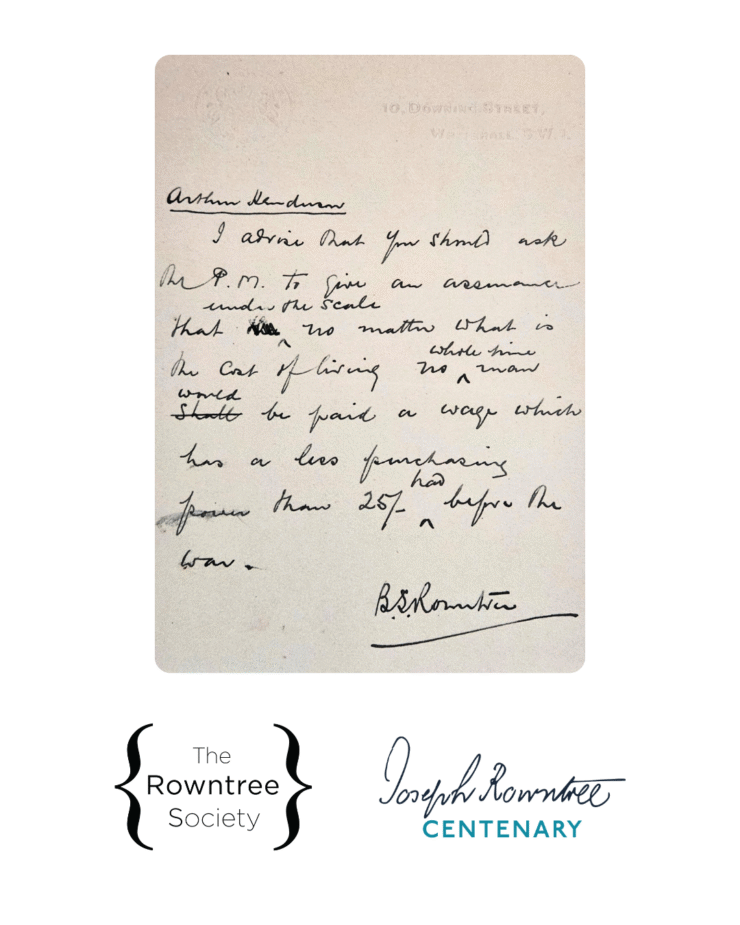
Seebohm Rowntree’s Quaker upbringing and poverty studies led him to believe that low wages were not helpful to the national economy and made it difficult for workers to maintain decent standards of humanity. As an adviser in Lloyd George’s wartime government he argued strongly for a national minimum wage in England which would enable people to live at a reasonable standard. Seebohm’s research focused very much on how much was required for people to live on and under both Joseph’s and his leadership the company offered attractive working conditions and welfare benefits. These were available to both male and female employees but, despite forming the majority of the workforce, women were paid less and had fewer privileges.


Support Us

Our work is enabled by grant funding from the Joseph Rowntree Foundation, the Joseph Rowntree Charitable Trust, and the Joseph Rowntree Reform Trust. If you would like to make a financial donation to further support our work, it is easy to pay online (with or without Gift Aid) by clicking the link below. You can get in touch with us about other ways of giving via info@rowntreesociety.org.uk

Donate

Why chocolate?

Many Quaker families went into business – including the making of chocolate – in the nineteenth century. Their dissenting faith excluded them from involvement in much other public life. Chocolate was also encouraged as a suitable alternative drink to alcohol. Chocolate making in England at this time was dominated by three families: Cadbury, Fry and Rowntree. All of them were involved in charitable work and pioneered social programmes in housing and welfare.

Support Us

Our work is enabled by grant funding from the Joseph Rowntree Foundation, the Joseph Rowntree Charitable Trust, and the Joseph Rowntree Reform Trust. If you would like to make a financial donation to further support our work, it is easy to pay online (with or without Gift Aid) by clicking the link below. You can get in touch with us about other ways of giving via info@rowntreesociety.org.uk

Donate

Joseph and Seebohm’s writings about poverty

One of the most significant parts of Joseph’s legacy is his focus on poverty , specifically identification of the root causes of poverty and methods by which these might be tackled. He believed that the public needed urgently to be made aware of these facts and how widespread poverty was throughout the country. Joseph was an early advocate for the existence of the poverty cycle in which people move in and out of poverty during their lifetime. He supported his son, Seebohm’s, work on scientific analysis of poverty in York. For his book, Poverty: A Study of Town Life, Seebohm conducted an analysis of 11.500 families using house to house enquiries to tabulate income and expenditure, demonstrating that much poverty was caused by low incomes and providing hard, statistical evidence for the existence of the poverty cycle. Joseph was very much ahead of his time in his attitude towards poverty and his vision is still relevant, something he would almost certainly be very disappointed about if he were here today. Today the Joseph Rowntree Foundation continues to work to resolve poverty.

Support Us

Our work is enabled by grant funding from the Joseph Rowntree Foundation, the Joseph Rowntree Charitable Trust, and the Joseph Rowntree Reform Trust. If you would like to make a financial donation to further support our work, it is easy to pay online (with or without Gift Aid) by clicking the link below. You can get in touch with us about other ways of giving via info@rowntreesociety.org.uk

Donate

Adult School Movement

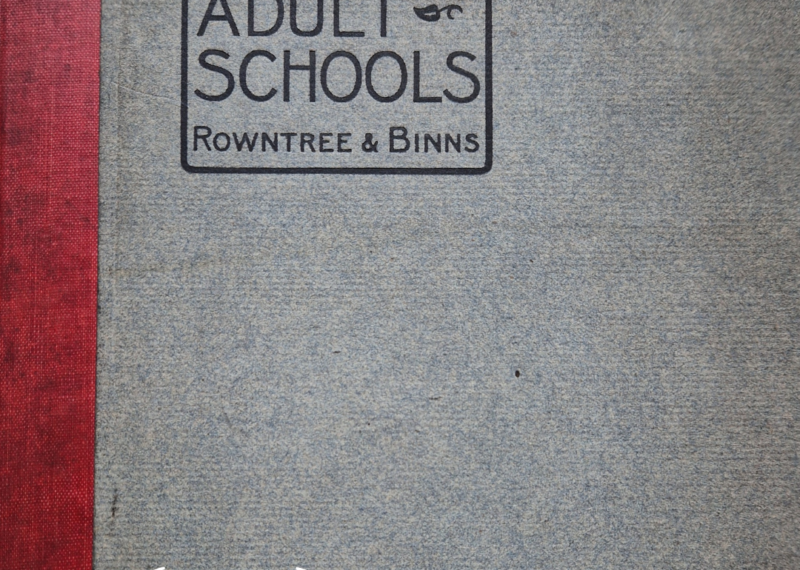
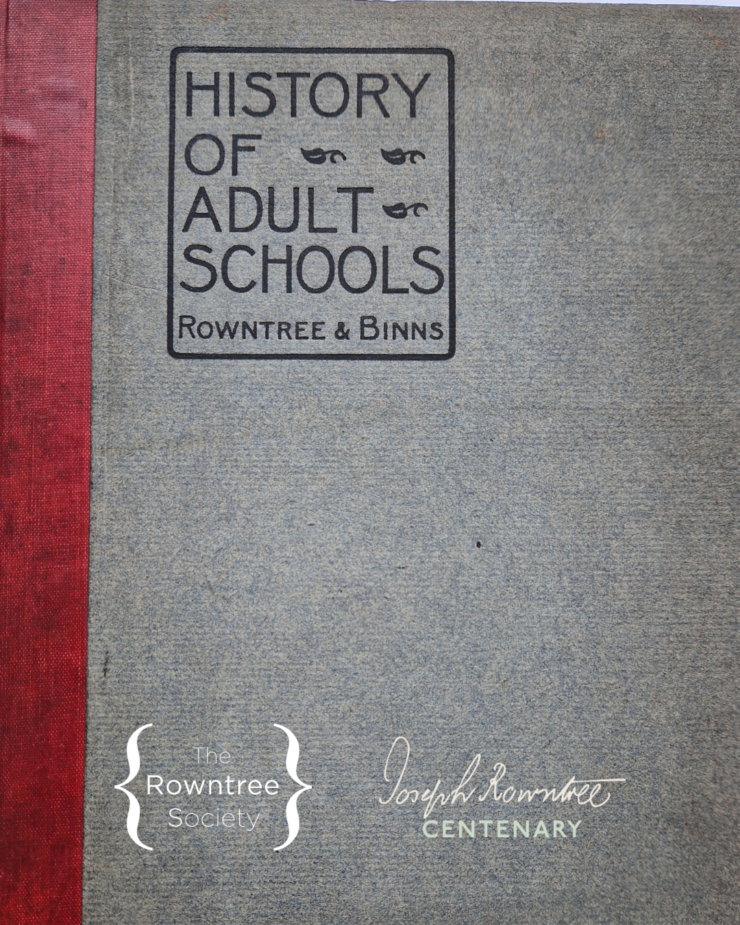
One man in five and one woman in three could neither read nor write in mid-Victorian York. This led Joseph Rowntree (Senior) and other Quakers to set up the first adult school. John Wilhelm Rowntree was a huge influence in the formation of York’s Adult School movement. setting up the Acomb school, and wrote A History of the Adult School Movement with Henry Binns. Almost every Rowntree family member was involved with this educational programme and Joseph was aged 21 when he first took charge of a class and nearly 60 when he finished teaching there every Sunday morning. This was one of the Rowntree family’s most innovative contributions to York arising from their belief in the importance of education in improving people’s lives and prospects.

Support Us

Our work is enabled by grant funding from the Joseph Rowntree Foundation, the Joseph Rowntree Charitable Trust, and the Joseph Rowntree Reform Trust. If you would like to make a financial donation to further support our work, it is easy to pay online (with or without Gift Aid) by clicking the link below. You can get in touch with us about other ways of giving via info@rowntreesociety.org.uk

Donate

John Wilhelm Rowntree

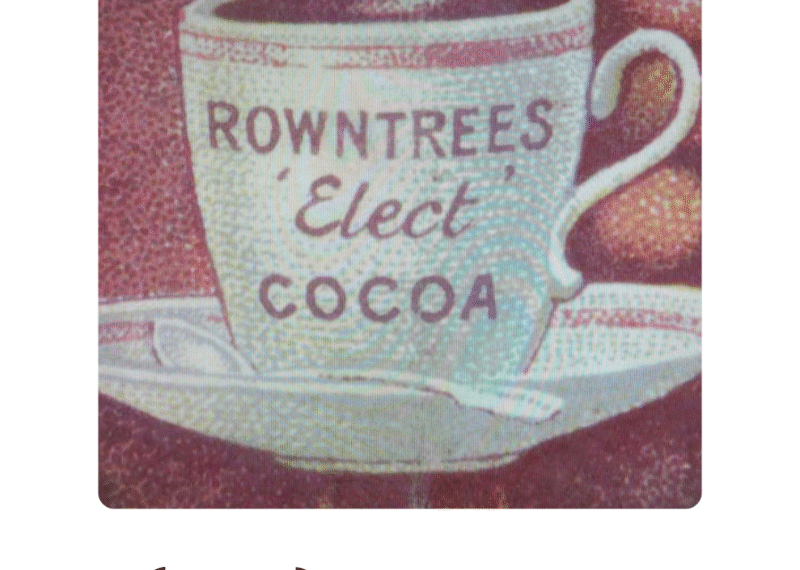
John Wilhelm was the eldest of Joseph’s sons. He was interested in internationalising the Rowntree & Co. business, particularly establishing supply chains of raw materials and selling Rowntree Cocoa to other countries. It was for this reason that he advocated the acquisition of plantation estates in Jamaica and Dominica to supply cocoa. He was a close advisor to his father but they did not always agree on strategy, especially regarding the acquisition of these estates. John Wilhelm was also very instrumental in the development of Quaker thought and a new branch of ‘Liberal’ Quakerism, working with the American Quaker, Rufus Jones. He believed that religion should be relevant to society’s needs and argued that Quakers should vigorously pursue their peace mission and join wider non-conformist campaigns on issues such as temperance and social reform. Sadly, he died at the age of 36 so we do not know what he would have achieved had he lived to the age of his father.

Image from originals held at the Borthwick Institute for Archives.

Support Us

Our work is enabled by grant funding from the Joseph Rowntree Foundation, the Joseph Rowntree Charitable Trust, and the Joseph Rowntree Reform Trust. If you would like to make a financial donation to further support our work, it is easy to pay online (with or without Gift Aid) by clicking the link below. You can get in touch with us about other ways of giving via info@rowntreesociety.org.uk

Donate

The Temperance Problem and Social Reform

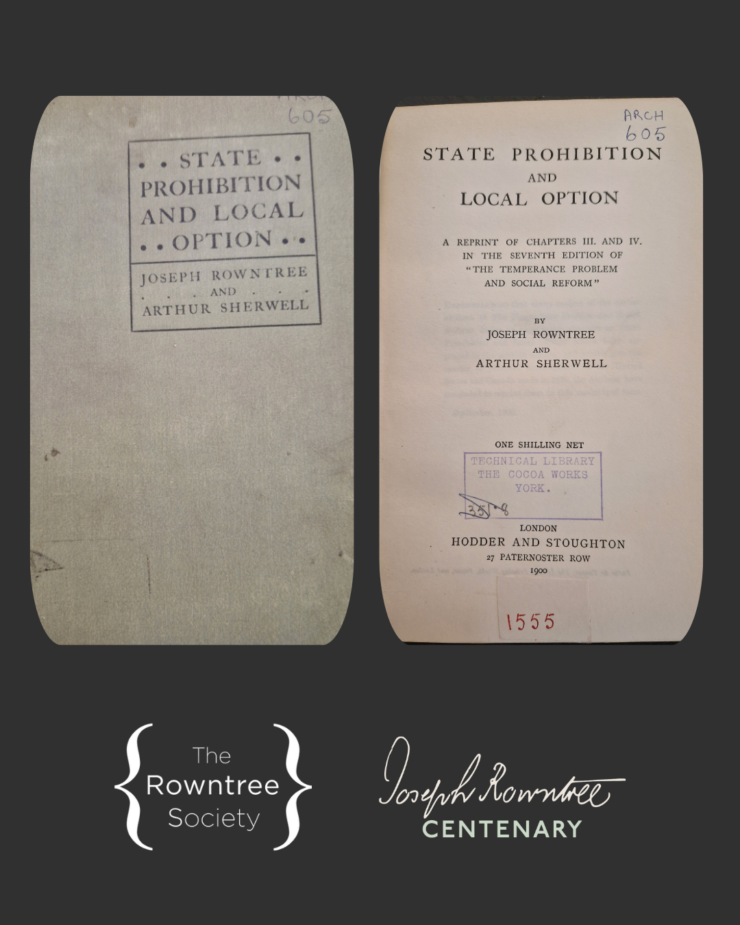
In the late nineteenth century, there was a belief that poverty was solely related to alcohol consumption. Joseph did not hold this view but suspected that alcohol was a contributory cause. He wrote: – “The temptation of drink is so seductive that people come under its influence almost without knowing, and it may be in middle life when they discover with dismay that they are in the grip of a dangerous habit.” Together with Arthur Sherwell he set out to discover the facts and their research led to the publication of The Temperance Problem and Social Reform in 1899. The impact of this book was such that it went into a number of editions. It, along with Pauperism in England and Wales, demonstrate Joseph’s ability to collect and explain data about social issues.

Image: York University Library

Support Us

Our work is enabled by grant funding from the Joseph Rowntree Foundation, the Joseph Rowntree Charitable Trust, and the Joseph Rowntree Reform Trust. If you would like to make a financial donation to further support our work, it is easy to pay online (with or without Gift Aid) by clicking the link below. You can get in touch with us about other ways of giving via info@rowntreesociety.org.uk

Donate

Pauperism in England & Wales

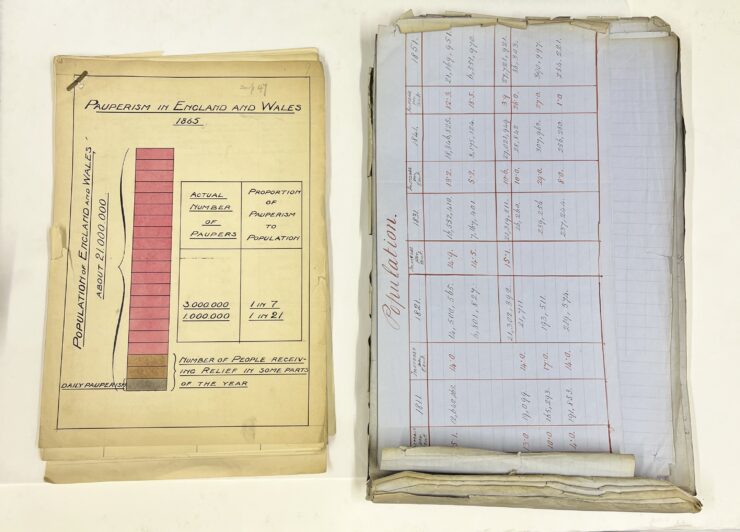
At the age of 30 Joseph wrote an essay entitled Pauperism in England and Wales. “It is a monstrous thing that in this land, rich in natural wealth and now rich beyond all precedent, millions of its inhabitants, made in the image of their Creator, should spend their days in a struggle for existence so severe as to blight (where it does not destroy), the higher parts of their nature.” Joseph was not afraid to express himself very strongly . On Tuesday 22nd January 1867 Joseph gave a lecture on Pauperism and the Poor Laws at the York Institute. His key arguments addressed the Poor Laws in existence at that time and their role in increasing rather than alleviating poverty. He used diagrams, charts and statistical tables extensively to make his point. He also highlighted wider influences that created poverty including wars, bad harvests and wide-spread intemperance. Sadly, the York Herald reported a limited attendance at this lecture due to inclement weather. Nevertheless, these thoughts and concerns about poverty continued to influence Joseph’s actions and his drive to achieve social justice for the rest of his life.


Image: courtesy of the Library of the Society of Friends.
 

Support Us

Our work is enabled by grant funding from the Joseph Rowntree Foundation, the Joseph Rowntree Charitable Trust, and the Joseph Rowntree Reform Trust. If you would like to make a financial donation to further support our work, it is easy to pay online (with or without Gift Aid) by clicking the link below. You can get in touch with us about other ways of giving via info@rowntreesociety.org.uk

Donate

Use of statistics and Quaker attitude to science

Joseph inherited a sense of the value of statistical analysis from his father and Quaker attitudes to science influenced his social research. He began collecting data relating to poverty in his twenties taking a scientific and non-discriminatory approach. He compiled figures on numbers of paupers and also illiterate men and women. He used the same approach to analysis in his temperance studies. This enabled him to make connections between poverty, illiteracy, crime and use of alcohol. His son Seebohm’s poverty surveys in York continued and built on this work. The Joseph Rowntree Foundation (JRF) conducts statistical analysis of poverty today. Example of statistical analysis from Chapter 3 of Rowntree and Sherwell’s The Temperance Problem and Social Reform.


Support Us

Our work is enabled by grant funding from the Joseph Rowntree Foundation, the Joseph Rowntree Charitable Trust, and the Joseph Rowntree Reform Trust. If you would like to make a financial donation to further support our work, it is easy to pay online (with or without Gift Aid) by clicking the link below. You can get in touch with us about other ways of giving via info@rowntreesociety.org.uk

Donate

Who was Joseph Rowntree?

“A private man compelled by forces within him to become a public philanthropist” Chris Titley, Joseph Rowntree, 2013 Joseph Rowntree, the man who made Rowntrees into a household name, was an extraordinary figure in his own right – a philanthropist far ahead of his time, a progressive employer, a radical thinker and a social innovator.

Image from originals held at the Borthwick Institute for Archives.

Support Us

Our work is enabled by grant funding from the Joseph Rowntree Foundation, the Joseph Rowntree Charitable Trust, and the Joseph Rowntree Reform Trust. If you would like to make a financial donation to further support our work, it is easy to pay online (with or without Gift Aid) by clicking the link below. You can get in touch with us about other ways of giving via info@rowntreesociety.org.uk

Donate