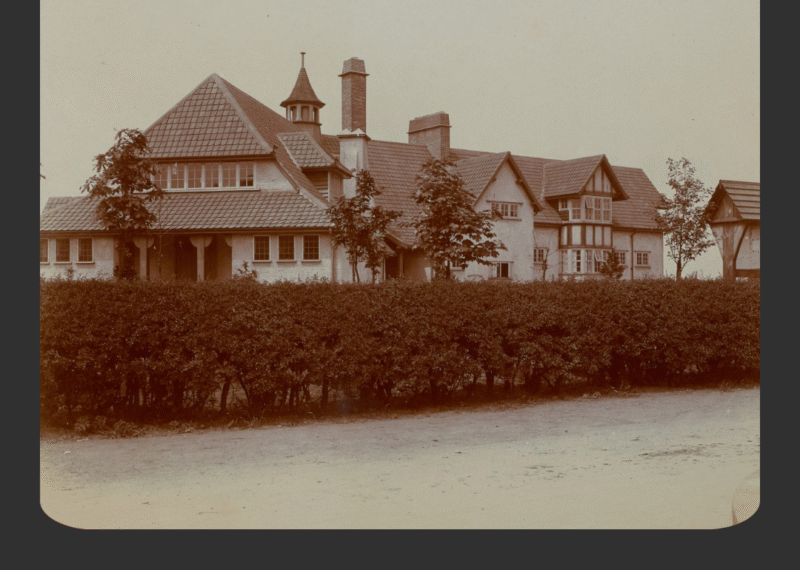
New Earswick Folk Hall

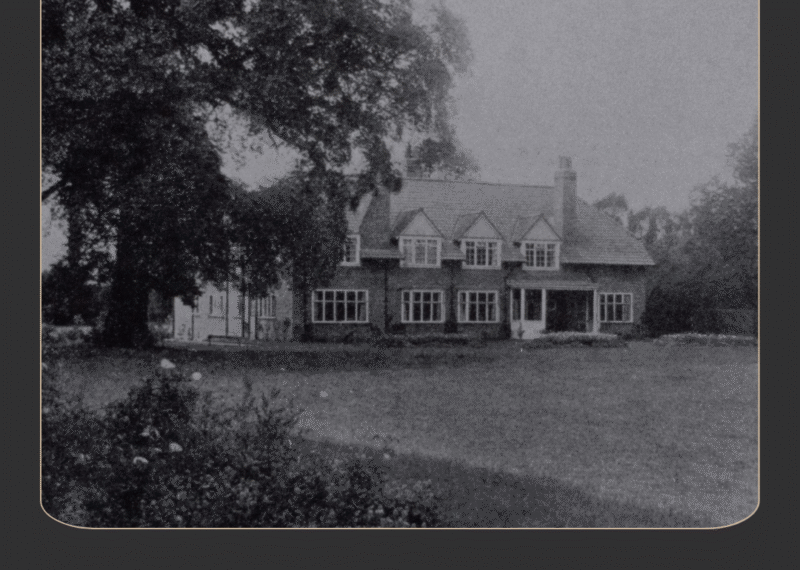
The Folk Hall occupied a prominent position at the centre of the village in planning for New Earswick. As the population grew there was a need for a meeting place that would form the centre of village social and religious life. Building began in 1906 and was completed in 1907 providing a multiuse space that could host a range of community activities and pastimes, including village stage productions for which it was fully equipped. An extension in the form of a hall was built in 1935 to enable the building to cater for larger events. Following a large-scale refurbishment in 2017, which opened up spaces whilst respecting the original Arts and Crafts design features, the Folk Hall continues to function as a busy community venue with a post office, library, café and space for professional meetings and events.

Support Us

Our work is enabled by grant funding from the Joseph Rowntree Foundation, the Joseph Rowntree Charitable Trust, and the Joseph Rowntree Reform Trust. If you would like to make a financial donation to further support our work, it is easy to pay online (with or without Gift Aid) by clicking the link below. You can get in touch with us about other ways of giving via info@rowntreesociety.org.uk

Donate

New Earswick

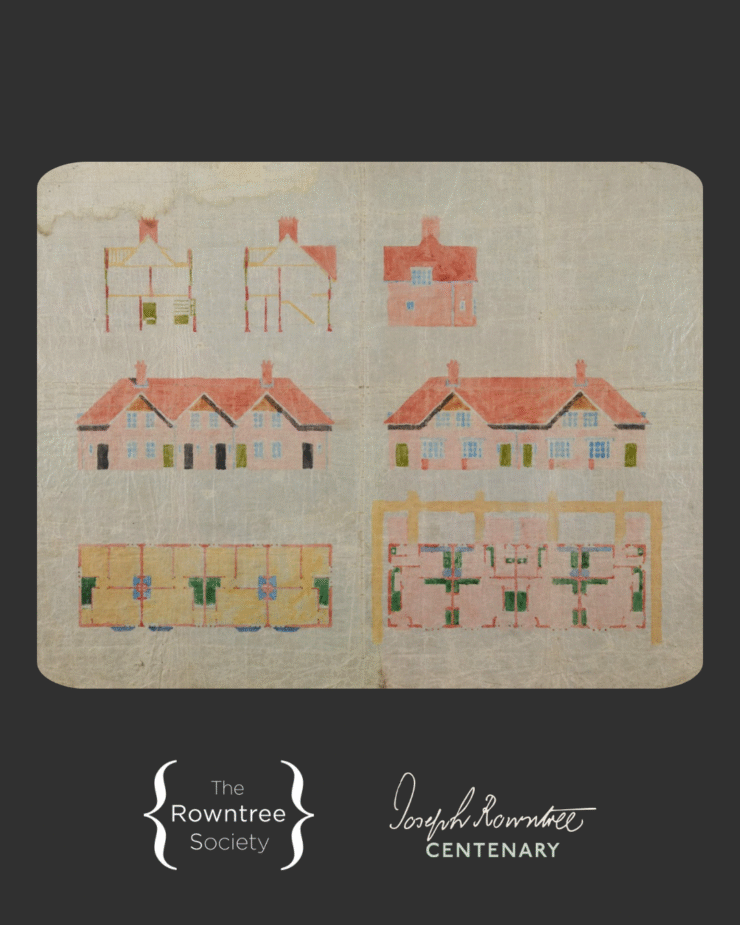
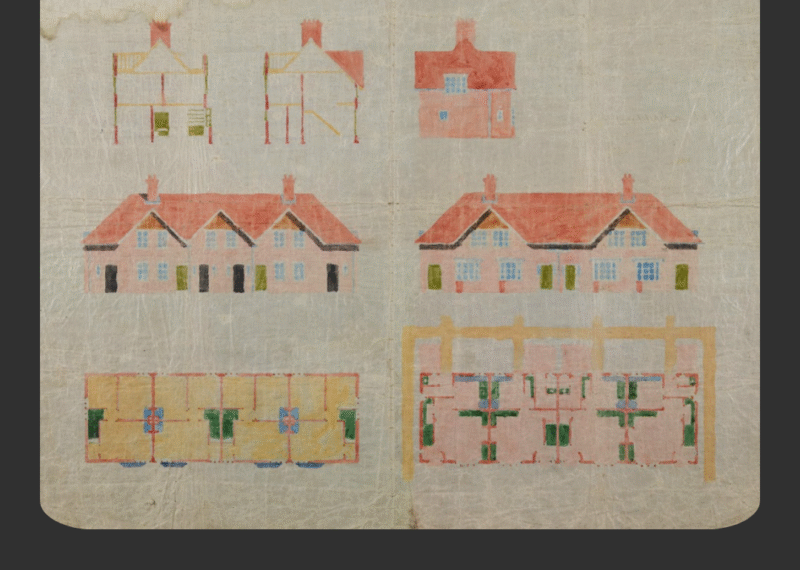
Joseph was able to turn his attention to another great issue that preoccupied him once the Cocoa Works was built and increasing in prosperity. He wanted to make a contribution to solving the housing problem. In 1901 a 150 acre site was purchased at New Earswick, two miles outside York and close to the Haxby Road factory, for £6000. Renowned Arts and Crafts architects, Barry Parker and Raymond Unwin were appointed in 1902. Their plan for the village implemented many of the ideas of the Garden Cities Association. These were to provide open green spaces and community facilities as well as houses. Joseph’s aim was to improve workers’ living conditions and help workers leave insanitary houses in the city which possessed some notable slums. Houses were available to workers in general, not simply to Rowntree employees. The village became a blueprint for other garden suburbs in the country and the vision that lay behind it still attracts international attention today.

Support Us

Our work is enabled by grant funding from the Joseph Rowntree Foundation, the Joseph Rowntree Charitable Trust, and the Joseph Rowntree Reform Trust. If you would like to make a financial donation to further support our work, it is easy to pay online (with or without Gift Aid) by clicking the link below. You can get in touch with us about other ways of giving via info@rowntreesociety.org.uk

Donate

Allotments Movement

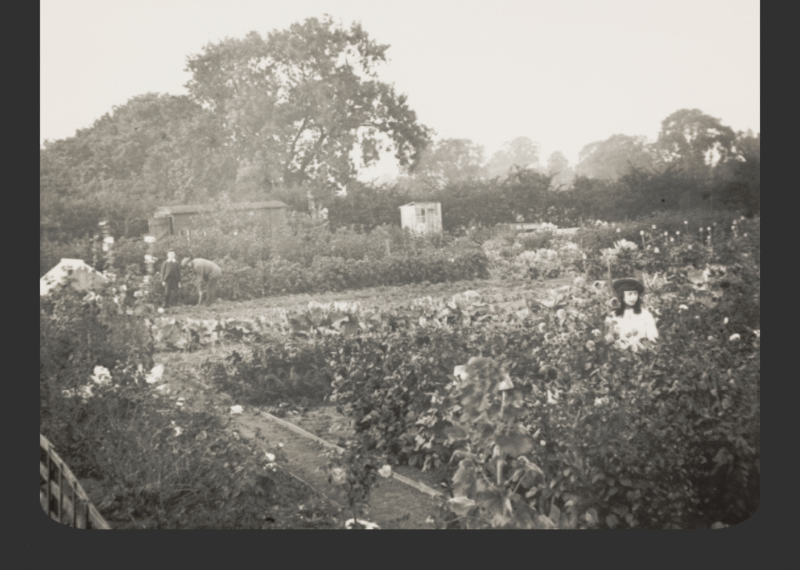
By the end of the nineteenth century providing space for allotments was known to be an effective way to tackle poverty. Allotmenteering was viewed positively by the upper classes as a form of ‘self-help’ rather than charity. Many landholders gifted land for this purpose. The Rowntrees followed this approach; generous provision for allotment land was made in their plans for New Earswick. The outbreak of the First World War brought new impetus as Britain was heavily dependent on food imports. The Rowntrees realised the implications of potential shortages and increased the amount of space available for allotments. In 1917 they also permitted women to become allotment holders, a progressive step which recognised the reality for many York families whose men were away fighting. At the end of the war more space was made available for soldiers returning so that they and female staff would not be competing. Other landowners, however, decided to reclaim the space that had been requisitioned during the war. Concerns about the impact of climate change, food provenance and security and interest in organic produce has led to the revival of interest in allotments since the 1990s and the National Allotments Society continues to represent the interests of UK allotment holders today.


Support Us

Our work is enabled by grant funding from the Joseph Rowntree Foundation, the Joseph Rowntree Charitable Trust, and the Joseph Rowntree Reform Trust. If you would like to make a financial donation to further support our work, it is easy to pay online (with or without Gift Aid) by clicking the link below. You can get in touch with us about other ways of giving via info@rowntreesociety.org.uk

Donate

Michael Rowntree

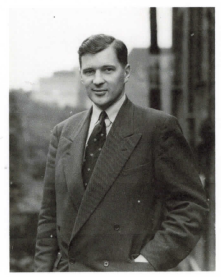
Michael Rowntree, great-nephew of Joseph, had a lifelong love of natural history and the environment, especially birding – interests he shared with his great-uncle. He led a full life of public service despite his unassuming character, sharing the Quaker faith and principles of Joseph and other Rowntree family members. During World War Two he was a conscientious objector (pacifist principles meant that Quakers did not fight) and served in the Friends Ambulance Unit in Finland, the Middle East and Germany. After the war his first career was in newspapers and in the 1950s he became general manager of the Oxford Mail and Oxford Times. Michael held a number of senior roles in Oxfam, including that of Chairman from 1971 to 1977, and was a Trustee of both the JRCT and JRSST. He was also an advocate for the National Health Service serving on both Oxford Hospitals and Scarborough Health Authority’s governing bodies.

Support Us

Our work is enabled by grant funding from the Joseph Rowntree Foundation, the Joseph Rowntree Charitable Trust, and the Joseph Rowntree Reform Trust. If you would like to make a financial donation to further support our work, it is easy to pay online (with or without Gift Aid) by clicking the link below. You can get in touch with us about other ways of giving via info@rowntreesociety.org.uk

Donate

University of York

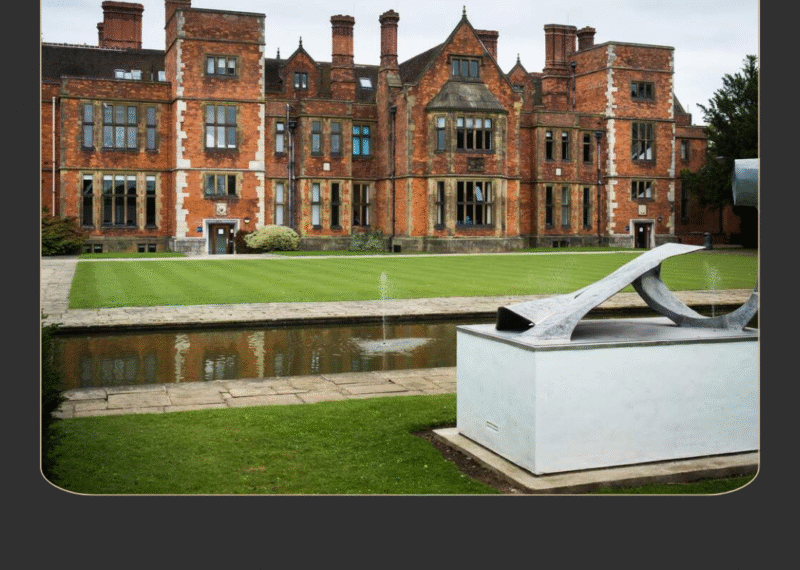
The campaign to found a university in York began in the 1940s and was insitigated by the same men who founded York Civic Trust in 1946. John Bowes Morrell, and Oliver Sheldon, both directors of Rowntree & Co, played key roles in the campaign. In March 1961 The JRRT/JRSST promised £150,000; the JRMT £100,000 and Rowntree and Co. Ltd promised £100,000 in grants payable over the first ten years of the university’s existence to assist it’s foundation. The JRSST/JRRT also made a separate gift to the university of Heslington Hall and its gardens and grounds – 17 acres in total. Several other company directors and trustees have held positions of responsibility in the University. A building in Social Sciences is named after Seebohm Rowntree.

Support Us

Our work is enabled by grant funding from the Joseph Rowntree Foundation, the Joseph Rowntree Charitable Trust, and the Joseph Rowntree Reform Trust. If you would like to make a financial donation to further support our work, it is easy to pay online (with or without Gift Aid) by clicking the link below. You can get in touch with us about other ways of giving via info@rowntreesociety.org.uk

Donate

The Homestead, Homestead Park and the Garden House

The Homestead is an Arts and Crafts house built by Seebohm Rowntree as his family home. The architect was Fred Rowntree, second cousin to Seebohm and a noted architect .In 1935 Seebohm directed his second poverty study of York , Progress and Poverty published in 1941, from here. On his departure the house was sold to the Joseph Rowntree Village Trust on condition that the gardens be maintained as a public park. Peter Rowntree, Seebohm’s son and a Rowntree company director, lived there as the trust’s tenant until 1978, following which the house was converted to the head office of Rowntree Mackintosh Ltd. In 1988 when Nestle took over Rowntree Mackintosh, the company offices moved back to Haxby Road and the Joseph Rowntree Foundation moved its main office into the Homestead. All three of the Rowntree trusts now have their offices on this site. The JRF continue to own and manage the gardens of Homestead Park as a public space.


Support Us

Our work is enabled by grant funding from the Joseph Rowntree Foundation, the Joseph Rowntree Charitable Trust, and the Joseph Rowntree Reform Trust. If you would like to make a financial donation to further support our work, it is easy to pay online (with or without Gift Aid) by clicking the link below. You can get in touch with us about other ways of giving via info@rowntreesociety.org.uk

Donate

Relationship between Trusts & Company at Creation

The endowment that created the three Rowntree trusts came in the form of Rowntree & Co. Ltd shares, which created a unique relationship between a company and trusts focussed on social reform. Up until 1969 when Rowntrees merged with Mackintosh, the trusts were majority shareholders in the confectionery company. There was also strong Rowntree family involvement in the governance of the Trusts through to the 1990s when Michael Rowntree (great-nephew of Joseph) stepped down from the Joseph Rowntree Charitable Trust.
Support Us

Our work is enabled by grant funding from the Joseph Rowntree Foundation, the Joseph Rowntree Charitable Trust, and the Joseph Rowntree Reform Trust. If you would like to make a financial donation to further support our work, it is easy to pay online (with or without Gift Aid) by clicking the link below. You can get in touch with us about other ways of giving via info@rowntreesociety.org.uk

Donate

Joseph Rowntree Reform Trust Ltd

Founded as the Joseph Rowntree Social Services Trust (JRSST), this trust was structured as a limited company to enable it to give funds to overtly political causes and to advance the non-charitable aspects of Joseph’s vision of society. Joseph’s concerns about journalistic standards and the power of the wealthy to influence public opinion through the press led to the Trust acquiring various national and regional liberal newspapers. In 1990 the Trust became the Joseph Rowntree Reform Trust (JRRT) and, although it has evolved and changed it’s focus, it maintains its links with Quakerism, liberalism and progressive politics. Commitment to political reform has been a key part of its focus from the beginning and today it is in the fields of democratic and political reform that the JRRT seeks to make a difference.

Support Us

Our work is enabled by grant funding from the Joseph Rowntree Foundation, the Joseph Rowntree Charitable Trust, and the Joseph Rowntree Reform Trust. If you would like to make a financial donation to further support our work, it is easy to pay online (with or without Gift Aid) by clicking the link below. You can get in touch with us about other ways of giving via info@rowntreesociety.org.uk

Donate

Joseph Rowntree Foundation (JR Memorial Trust)

The Joseph Rowntree Foundation (JRF) was initially established as the Joseph Rowntree Village Trust with the objective of alleviating the conditions of working people by providing improved housing. Part of its endowment included the New Earswick garden village properties. In 1959 the trust changed its name to the Joseph Rowntree Memorial Trust and its powers were widened to enable it to support research into housing and social questions. The Joseph Rowntree Housing Trust was created in 1968 as a separate housing organisation and took over responsibility for housing operations. In 1988 the trust was renamed the Joseph Rowntree Foundation and moved to the Homestead. Today the JRF is the one of the largest social policy research charities in the UK, working to transition to a future free from poverty.

Support Us

Our work is enabled by grant funding from the Joseph Rowntree Foundation, the Joseph Rowntree Charitable Trust, and the Joseph Rowntree Reform Trust. If you would like to make a financial donation to further support our work, it is easy to pay online (with or without Gift Aid) by clicking the link below. You can get in touch with us about other ways of giving via info@rowntreesociety.org.uk

Donate

Joseph Rowntree Charitable Trust

Quaker commitment to peace and social justice was at the heart of Joseph’s vision for the Joseph Rowntree Charitable Trust (JRCT). It was charged with supporting social research, adult education and the Society of Friends and tackling the roots of problems with the objective of achieving lasting benefit. This was very much a reflection of the beliefs which were integral to the life and actions of its founder. The Trust has supported a number of initiatives towards the aims of disarmament and international dialogue. Racial justice, including asylum and immigration policy, became a new focus after the Second World War. The Trust continues to support people who address the root causes of conflict and injustice today.

Support Us

Our work is enabled by grant funding from the Joseph Rowntree Foundation, the Joseph Rowntree Charitable Trust, and the Joseph Rowntree Reform Trust. If you would like to make a financial donation to further support our work, it is easy to pay online (with or without Gift Aid) by clicking the link below. You can get in touch with us about other ways of giving via info@rowntreesociety.org.uk

Donate