
Rowntree Political Connections and Influences
Published on 13th October 2026
As part of our Rowntree Political Connections and Influences project, we wanted to explore the political ideas and people who inspired members of the Rowntree family in developing their own political views and approaches. Amelia Ross, our summer 2026 intern and an undergraduate student at Newcastle University studying History and Spanish, undertook this research for us. In this piece, she presents her findings.
This article is part of The Rowntree Society’s Political Connections and Influences Project which explores the influential people, political relationships and significant events that shaped the Rowntree family’s approach to politics. The Rowntrees are well known for their Quaker beliefs and predominantly liberal stance, with Henry Isaac Rowntree articulating the family’s foundational principles as opposing “alcoholism, toryism, priestcraft and all other concrete forms of sin.”[1] His words reflect the combination of social responsibility and political engagement that underpinned their work. Political engagement formed an important part of the Rowntree family’s commitment to social reform. Joseph Rowntree Senior (1801-1856) established the family’s liberal traditions in York, with his son, Joseph Rowntree (1836-1925) becoming one of the founders of the York Liberal Association where he served as its long-term chairman. Other members of the family actively involved in politics included Arnold, Seebohm, Oscar and Joshua Rowntree. In this article we will highlight the influence of several political figures, people and events that impacted the Rowntree’s politics.
John Bright
Joseph Rowntree was particularly influenced by John Bright, a Quaker, Liberal MP who represented Durham, Manchester and Birmingham throughout his parliamentary career. Bright attended Bootham school for two years in 1823, just one year after Joseph Rowntree Senior arrived in York to open his grocery business.[2] In 1839 he then became a distant relative of the Rowntree family through his marriage to Elizabeth Priestman. After attending school, Bright worked in his father’s cotton mill where he was exposed to difficulties faced by the working class.[3]
John Bright’s most notable political work includes his participation in the Anti-Corn Law League, where from 1839 he fought to reduce high tariffs on imported corn or grain.[4] In 1846, the Corn Laws were repealed, making imports cheaper during domestic shortages. This work appealed to the Rowntrees whose core beliefs included supporting and lifting people out of poverty.
Bright was an admirer of Joseph Rowntree Senior, who argued that Quakers should be allowed to marry outside of the religion, this was important to Bright whose sister had been cut off from the family for marrying a non-quaker.[5] Joseph Rowntree Senior was also appreciative of Bright’s protest against the Crimean War in 1853.[6] His son, Joseph Rowntree, wrote a memorandum on the life of John Bright and his influence. Although we don’t know the exact date this was written, it was sometime between 1918 and 1925. In this memorandum, Joseph expressed how he felt connected to Bright due to the similar ways they lost their fathers, and appreciated the work Bright did to pave the way for future Quakers and Liberals in parliament.[7]
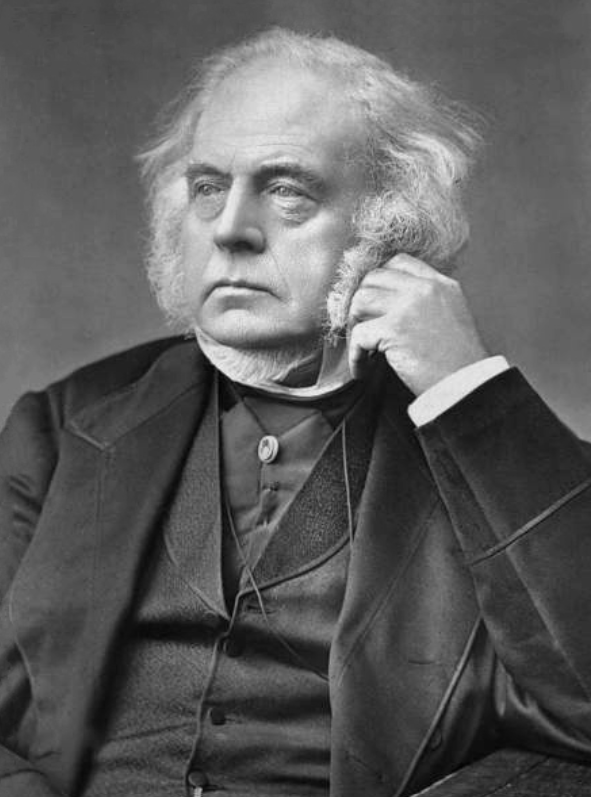
John Bright, 1870’s: Public domain
John Bright was an early proponent of the House of Lords reform movement, something that Joseph and Arnold Rowntree were supporters of. In 1907 Joseph wrote a leaflet on House of Lords reform, stating its importance in developing a more democratic state.[8] Arnold Rowntree, MP for York between 1910 and 1919, argued in 1911 that House of Lords reform and the removal of the House of Lords veto was the only way real change could occur for regular people.[9]
Joseph Rowntree’s admiration for John Bright was lifelong. After retiring from his role as Chairman of Rowntree & Co., he continued to come to his office at the Cocoa works where he was working on a biography of John Bright. Papers relating to this were left on his desk when he died.[10]
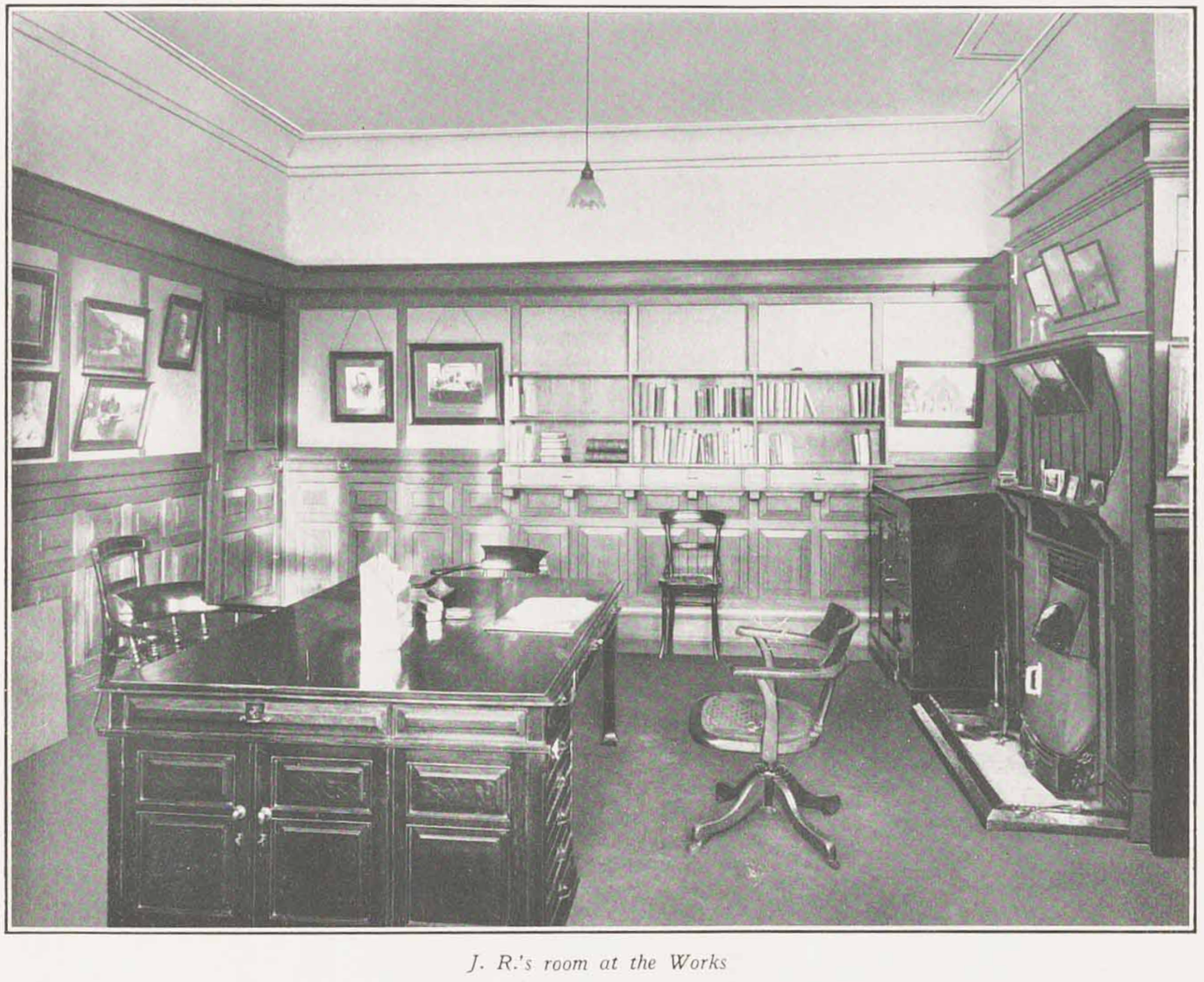
Joseph Rowntree’s office at the Cocoa Works, CWM Memorial Issue – Borthwick Institute for Archives RFAM/JR/JRF/1/7/6.
Joseph’s politics often aligned with Bright’s, however, there was one aspect where he disagreed. Joseph thought that Bright did not go far enough in promoting home rule in Ireland.[11]
David Lloyd George
David Lloyd George was a significant liberal connection for the Rowntree family. Lloyd George was the UK’s last Liberal Prime Minister, taking office in 1916 until the loss of the general election in 1922 to the Conservative Party. As an advocate of new liberalism, Lloyd George campaigned for social reform, wanting further government support for social welfare and the common good.
Lloyd George was closely connected with Seebohm Rowntree. Seebohm’s biographer Asa Briggs described their reciprocal appreciation of each other, saying that Seebohm “looked up to Lloyd George as a political genius.”[12] Lloyd George would wave copies of Rowntree’s Poverty: A Study of Town Life in Parliament and other political events.[13] He also went to stay with Seebohm at his house, The Homestead, in 1907.[14] Briggs describes both men as radical liberals, highlighting their dissatisfaction with the inequalities in the country.[15] Lloyd George appointed Seebohm to the post-war Reconstruction Committees in 1917 to help coordinate recovery of the economy, industry and society to build a new and more equitable country after the war. Lloyd George found it ironic that war would enable them to work together to create a modern state.[16]
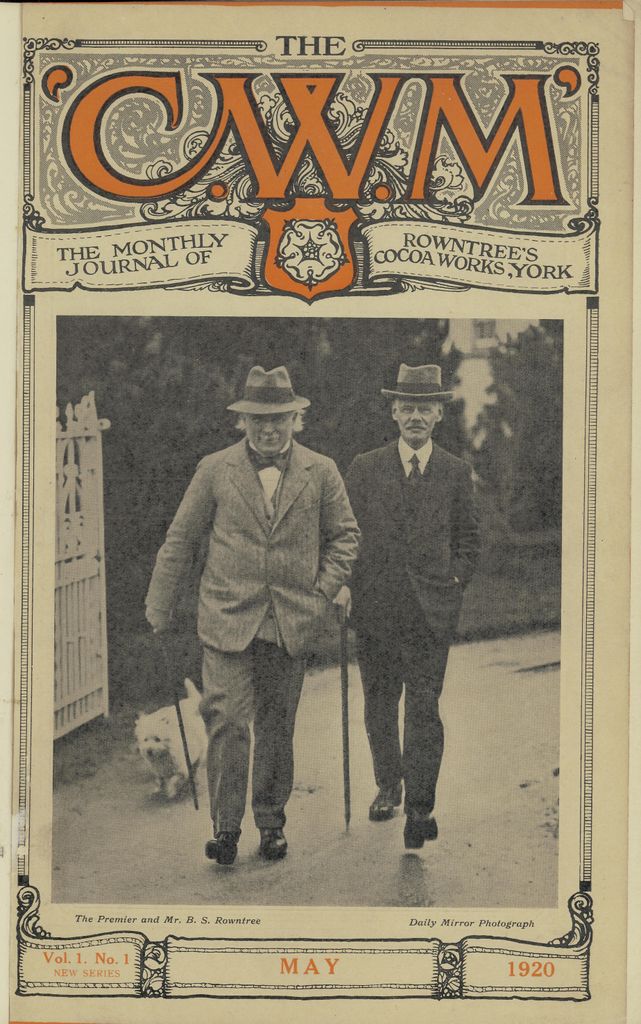
David Lloyd George and Seebohm Rowntree, CWM May 1920.
As addressed previously, House of Lords reform was an important topic for the Rowntrees, John Bright and in addition, Lloyd George. Lloyd George called the Lords “a body of 500 men chosen at random from amongst the unemployed.”[17] He would have been concerned about the power of the Lords as it was dominated by hereditary peers and members of the conservative party.[18] This means that they were able to comfortably reject liberal policies.[19] The similarities between Lloyd George, Bright, and the Rowntrees highlighted the importance of House of Lords reform for 19th and early 20th century Liberals who feared too much power in the hands of the unelected Lords.
Although the Rowntrees and Lloyd George shared common ground on several political and social issues, tensions developed between Arnold and Lloyd George regarding war. During the Boer War, Lloyd George criticised the conflict and the Conservative government.[20] As a Quaker, Arnold Rowntree also saw the Boer War as unjustifiable and unnecessary, continuing to hold beliefs that war was un-Christian during the First World War.[21] However, despite Lloyd George’s conduct during the Boer War, he went on to support the First World War.[22] This is where this disagreement between him and Arnold became further evident when Conscientious Objectors were placed on trial for refusing military service. Arnold challenged Lloyd George about the tribunals, stating that if conscription had been in place during the Boer war, Lloyd George would face tribunal for refusal to serve.[23] Lloyd George accepted that the tribunals were imperfect, but defended them on the grounds of public opinion, stating that they were “not helping war, but helping repair the hurt of war.”[24] This response reflected the political pressures of wartime Britain, where public demand for placing blame was stronger than concerns of civil liberties or pacifism.
Women’s suffrage
Emerging from the 1860’s, women’s suffrage became a divisive topic placing those involved in British politics, this included members of the Rowntree Family. Arnold Rowntree became most concerned with this topic through his marriage to Mary Katherine Harvey, most commonly known as May. May was amongst the early pioneers of women’s suffrage in York being part of York’s Women’s Liberal Association from 1906.[25] The Women’s Liberal Association was set up so that women could be involved in supporting and promoting liberalism. By the early 20th century, various members, including May, also saw their membership as an opportunity to enhance women’s rights and promote suffrage. May’s involvement led Arnold to be more concerned about women’s suffrage, choosing in 1911 to vote in favour of women becoming part of the franchise, against some more senior members in the Liberal Party.[26] Earlier, Joshua Rowntree, the Liberal MP for Scarborough in the 1880’s and 90’s and a distant cousin of Arnold, was also concerned with women’s suffrage and furthering women’s involvement in civic life.[27]
This topic was also concerning for other Quaker chocolate families. Sophia Fry, member of the Fry family, was a founder of the national Women’s Liberal Federation.[28] Sophia struggled to control many members of the Federation due to the divide between those who thought the Federation should focus exclusively on supporting Liberal Party concerns, and those who thought they should also address women’s suffrage. Whilst Sophia was personally in favour of women’s suffrage, she was more concerned that it could detach from the Federations main aims of supporting Liberal candidates and split the membership.[29] These concerns were similar to Arnold Rowntree’s, who feared further Liberal division could occur on voting for Women’s suffrage in Parliament.
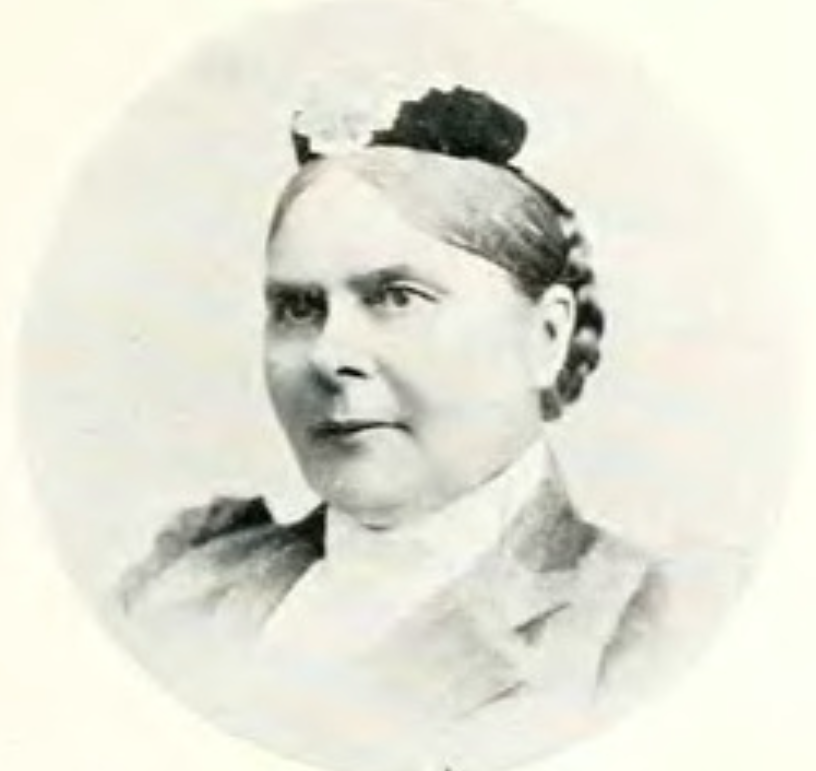
Sophia Pease 1810 (page 71 crop), Photographic pedigree of the descendants of Isaac and Rachel Wilson, public domain.
Another organisation who was attempting to introduce further women’s rights was The Fabian Society. For one of its most prominent members, Beatrice Webb, women’s suffrage was not the most important step to equality, although she believed men and women should have equal standing in the workplace and to be paid the same.[30] This focus on the workplace has parallels with Seebohm’s work where he engaged in industrial democracy which included women, rather than political elements of suffrage.[31] Joseph Rowntree was more difficult to convince, as in the 1880’s he mirrored John Bright who believed women should not have the right to vote.[32] It was the work of Arnold in politics and Seebohm in industry that by 1918 allowed Joseph to see the positives of women’s suffrage.[33]
The Fabian Society and the emergence of the Labour Party
The Fabian Society was founded in 1884, promoting social reform through gradual, constitutional change, as opposed to revolutionary action. Emphasising research and education meant it was an important influence on the creation of the Labour party in 1900. Amongst its leading figures were the married couple Sidney and Beatrice Webb who were central to its intellectual influence in the late 19th and early 20th centuries.
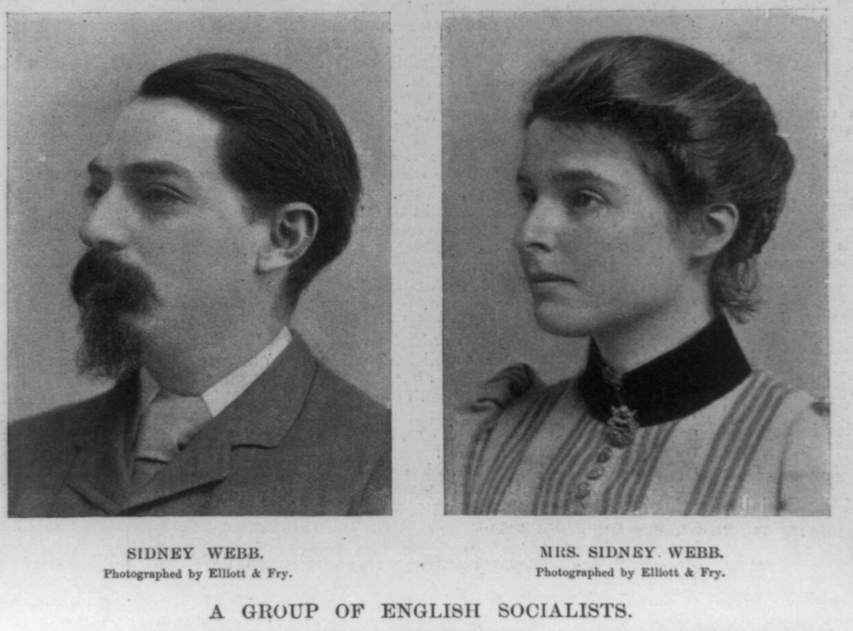
A Group of English Socialists, photographed by Elliott & Fry, 1894, public domain
The York branch of the Fabian Society was set up in 1908 by Joseph Rowntree’s nephew, Frank Rowntree, Bruno Lasker and May Kendall. Lasker and Kendall worked with Seebohm on his poverty studies, with May being known to have polished Seebohm’s work to make it more accessible to the wider public.[34] After the establishment of the York Fabians, she was named joint author alongside Seebohm of How the Labourer Lives: A study of the rural labour problem.
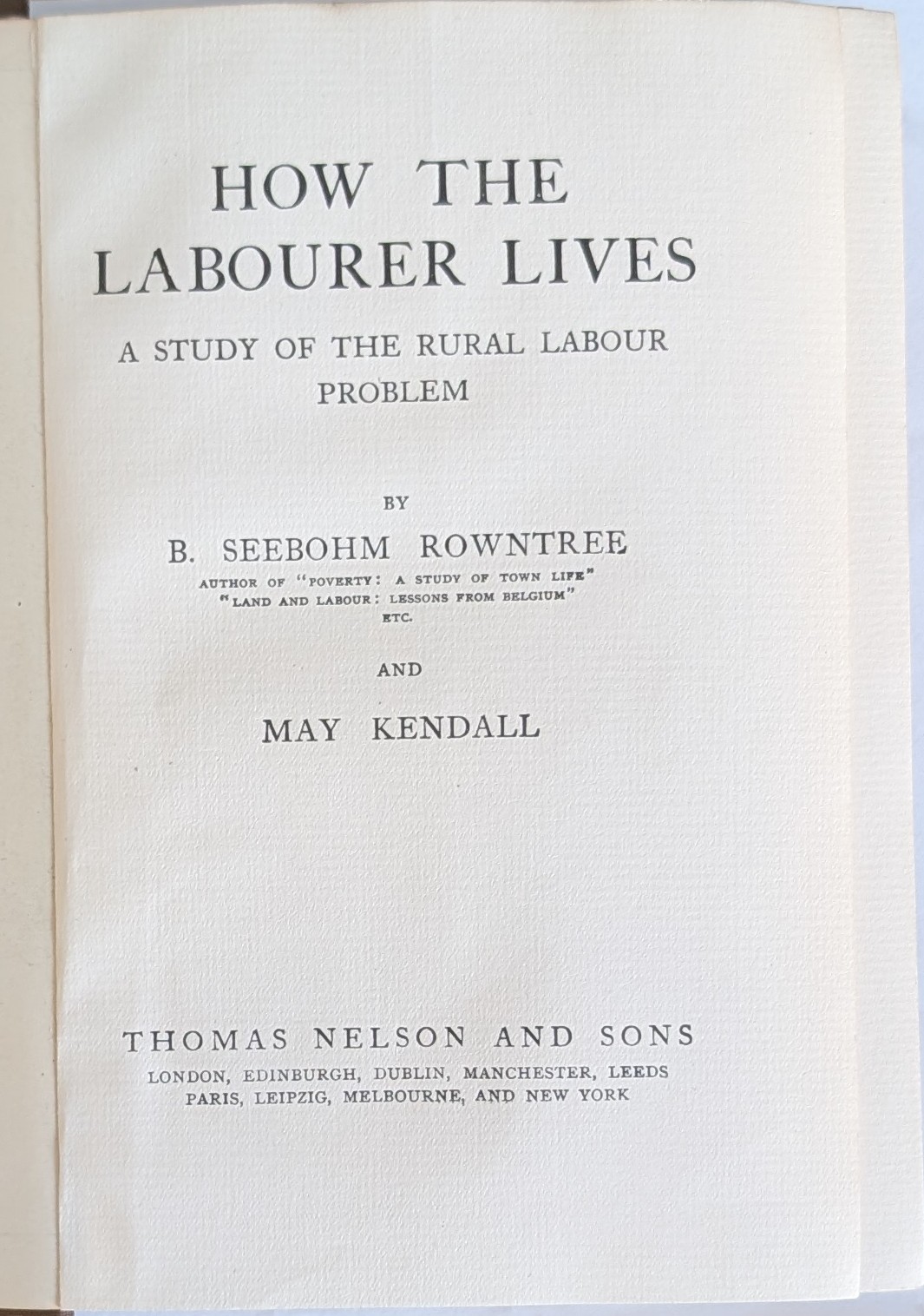
How the Labourer Lives, Title and author page, 1913.
Both Joseph and Seebohm Rowntree were friends with Sidney and Beatrice Webb. In 1899 during Seebohm’s work on Poverty: a study of town life, he invited Beatrice to his home to discuss ideas. There is also record of at least one subsequent dinner that Seebohm and Beatrice had in London to discuss social reform issues.[35] Joseph and Seebohm also planned to invite the Webbs to conferences of workers and managers to improve equality and resolve any issues of social unrest.[36] Independently of Seebohm, Joseph considered hiring the Webbs as consultants to find out if wages could be higher in York.[37]
As the labour movement developed, Joseph Rowntree recognised the emergence of the new Labour Party as a potential political threat to the Liberals. To avoid this, he hoped that they could both work together in York to develop a stronger front against the Conservative Party.[38] However, the local Labour Party chose to establish its own policies and political identity outside of external influence.[39] Whilst the parties did not work together, in 1924 Joseph Rowntree remained sympathetic towards the Labour Party. He argued that they should not be judged too quickly, highlighting that Labour MPs were committed to social reform and shared many of the same principles as Liberal politicians.[40]
Arnold Rowntree also had a similar approach to Joseph in his response to the Labour Party. He was encouraged by the rise of the Labour Party in 1906 and even attended meetings of Liberal MPs about cooperation with the Labour Party.[41] Arnold described himself upon entering parliament in 1910 as a ‘progressive liberal,’ and was known to collaborate with some new Labour MPs.[42]
Seebohm Rowntree had conflicted opinions on socialism. He gave a lesson at the Leeman Road Adult School where he said that although he agreed with socialism’s aim of equality of opportunity, he did not believe it presented practical ways of achieving it.[43] However, in his biography of Seebohm, Briggs thought Seebohm did not really understand socialism.[44] Despite this, Seebohm was sympathetic to several aspects of socialism. As a company director of Rowntree& Co., and chairman from 1923, he would have been unwilling to support a revolutionary movement that would threaten his family business. That this threat could be real was demonstrated in the August 1921 Central Works Council meeting where a workers representative said to Seebohm that Rowntree workers were expecting more control of the company.[45] This was only a few years after the Russian revolution and concerns that this could happen in Britain were expressed by Seebohm in The Human Factor in Business also published in 1921.[46] This could explain why he was more supportive of the Fabians and their ideology of gradualist and reformist efforts of enhancing social democracy. Seebohm was also supportive of trade unions so that workers could still play an active role in industrial and social developments.[47]
The Garden Village in New Earswick
In 1902, Joseph Rowntree commissioned Barry Parker and Raymond Unwin to construct New Earswick, one of the early garden villages in the country. They were architects connected to the Garden City Movement. Houses in New Earswick were constructed for “all persons who… earn a small income by the work of their hands or their minds.”[48] As a garden village, it was designed to create a community of civic responsibility and moral enlightenment.[49] Prior to this work, Parker and Unwin had not been involved in the construction of entire villages, towns or cities, but had designed buildings and were part of the Arts and Crafts movement. The movement was inspired by the work of John Ruskin, William Morris and others many of who advocated for socialist ideas.[50] Seebohm had been the one to find these architects for the construction of the garden village. Unwin was more involved in politics than his partner Parker. Briggs says Unwin “was one of Seebohm Rowntree’s ‘discoveries’ … who had been an enthusiastic supporter of William Morris’s Socialist League and a frequent contributor to the socialist periodical Commonwealth.”[51] This demonstrates Seebohm’s connections with socialists, and some of the ideas Joseph promoted in the commissioning of a garden village prior to the more famous settlements such as Letchworth were built.
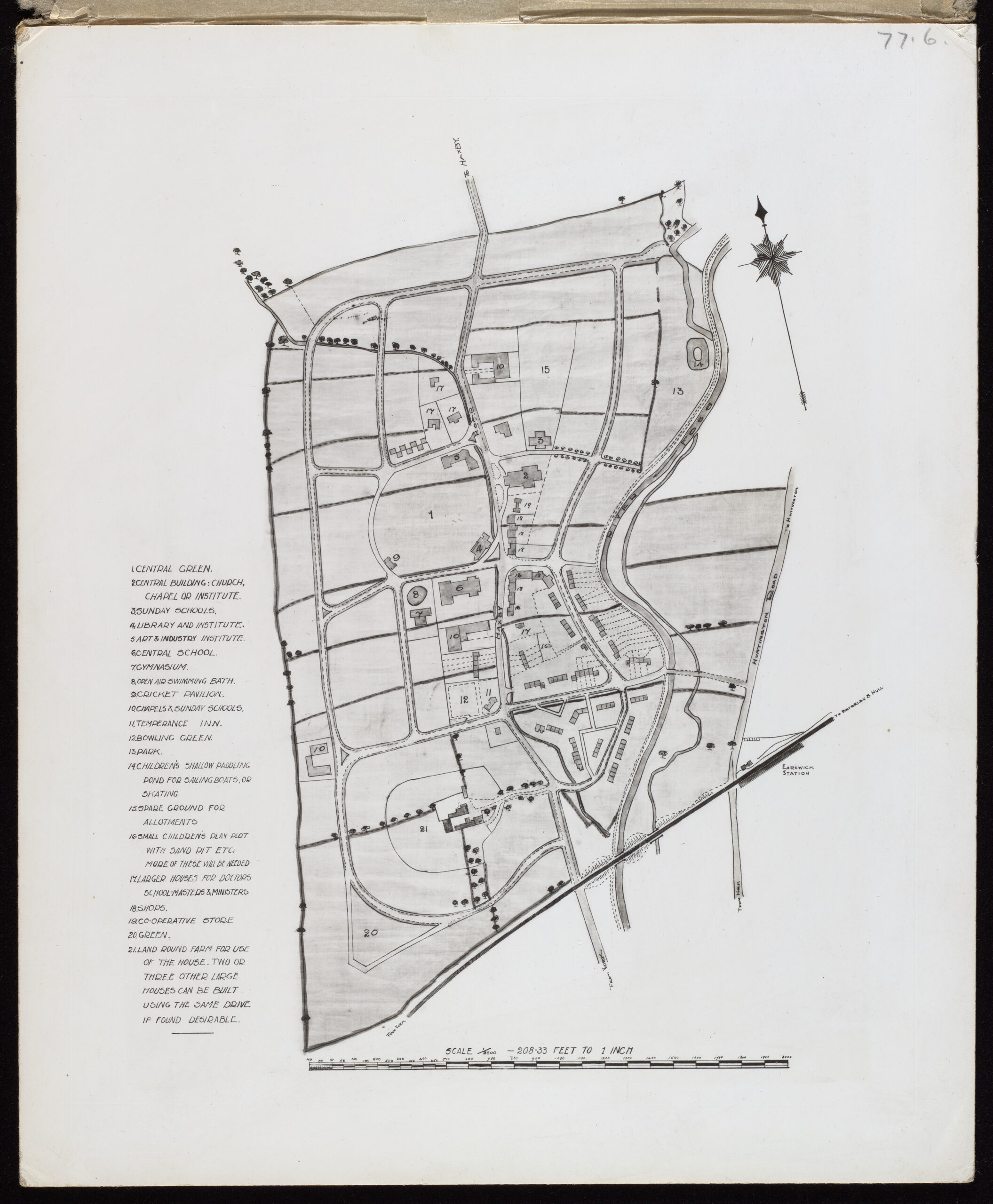
New Earswick Plan (photo), 1903- JRF_30_1_0245_3, Borthwick Institute for Archives.
Raymond Unwin was part of William Morris’ Socialist League, founded in 1885 focussing on furthering revolutionary aspects of socialism. Another influence on Unwin was the radical socialist thinker, Edward Carpenter. Carpenter “stretched socialism toward environmental and humanitarian causes,” focussing on simple life and gender and sexual equality.[52] Unwin had known Carpenter from a young age, and had regular discussions with Carpenter who argued that as socialists they should focus on practical projects in order to do some good, as opposed to waiting for a socialist revolution.[53] This links to the Rowntrees who also were practical in their approach to reform, with a willingness to accept views outside of liberalism to further their social reform work. Beyond his work on New Earswick, Unwin was involved in Lloyd George’s reconstruction committee. As part of this Unwin spent more time with Seebohm Rowntree, working together and sharing ideas.[54]
Conclusion
The Rowntree family’s political connections and influences were central to the development of their social reform ideas. Rooted in Quaker and liberal principles, the family engaged with politicians, social reformers, Fabians and socialists. Although individual Rowntrees sometimes disagreed with political allies, their shared commitment to improving living and working conditions remained consistent. Through these networks, the Rowntrees were able to connect local initiatives in York with wider national debates about poverty, housing, workers’ rights, democracy and social reform, helping to establish their work as an influential example of progressive social and industrial development.
References & Footnotes
[1] C. Brightwen Rowntree and E Margaret Sessions, The Rowntrees of Riseborough (York: Sessions Book Trust 1996), x.
[2] “Bootham Bicentenary,” Bootham School, accessed 3 July 2026, https://www.boothamschool.com/bicentenary/.
[3] Bill Cash, John Bright: Statesman, Orator, Agitator (London: I.B.Tauris & Co Ltd, 2012), 6.
[4] Cash, John Bright, 8.
[5] Anne Vernon, A Quaker Business Man: The Life of Joseph Rowntree 1836-1925 (York: Sessions Book Trust, 1987), 37.
[6] Memorandum on John Bright, (1918-1925): Borthwick institute for Archives, RFAM/JR/JRF/8/8, 1.
[7] Memorandum on John Bright, (1918-1925): Borthwick institute for Archives, RFAM/JR/JRF/8/8, 1.
[8] Leaflet on reform of the House of Lords, February 1907: Borthwick Institute for Archives, RFAM/JR/JRF/8/3.
[9] Scrapbook on ASR in public life, March 1911- September 1926: Borthwick Institute for Archives, RFAM/ASR/JRF/3/3, 7.
[10] CWM Special Memorial Number, Borthwick institute for archives, RFAM/JR/JRF/1/7/6, 21.
[11] Memorandum on John Bright, (1918-1925): Borthwick institute for Archives, RFAM/JR/JRF/8/8, 7.
[12] Asa Briggs, Seebohm Rowntree (Great Britain: The Whitefriars Press Ltd, 1961), 63.
[13] Briggs, Seebohm Rowntree, 63.
[14] Briggs, Seebohm Rowntree, 63.
[15] Briggs, Seebohm Rowntree, 63.
[16] Briggs, Seebohm Rowntree, 113.
[17] “David Lloyd George,” GOV.UK, accessed 19 June 2026, https://www.gov.uk/government/history/past-prime-ministers/david-lloyd-george.
[18] Gavin Thompson, Oliver Hawkins, Aliyah Dar and Mark Taylor, Olympic Britain: Social and economic change since the 1908 and 1948 London Games, (London: House of Commons Library, 2012), 147.
[19] Bentley Brinkerhoff Gilbert, “David Lloyd George: Land, The Budget, and Social Reform.” The American Historical Review 81, 5 (1976): 1060, https://doi-org.libproxy.ncl.ac.uk/10.2307/1852870.
[20] M.L. Dockrill, “David Lloyd George and Foreign Policy before 1914,” in A.J.P Taylor, Lloyd George: Twelve Essays (Great Britain: Western Printing Services Ltd, 1971), 3.
[21] Sarah Sheils, “Arnold Stephenon Rowntree, 1872-1951: a Liberal in the age of extremes,” York Historian, 37, (2020), 59.
[22] Peter Lowe, “The Rise to the Premiership 1914-16,” in Taylor, Lloyd George, 96.
[23] Arnold Stephenson Rowntree: Nine Years in Parliament’: Borthwick Institute for Archives, RFAM/ASR/JRF/3/9/5, 34.
[24] Scrapbook on ASR in public life, March 1911- September 1926: Borthwick Institute for Archives, RFAM/ASR/JRF/3/3, 135.
[25] Sheils, “Arnold Stephenson Rowntree,” 55.
[26] Scrapbook on ASR in public life, March 1911- September 1926: Borthwick Institute for Archives, RFAM/ASR/JRF/3/3, 7.
[27] J. S. Davies and M. Freeman, (2014) “A Case of Political Philanthropy: The Rowntree Family and the Campaign for Democratic Reform”, Quaker Studies 9(1). 100.
[28] Linda Walker, “Fry [née Pease], Sophia, Lady Fry (1837-1897), philanthropist and political activist,” Oxford Dictionary of National Biography, 23 September 2004, accessed 20 July 2026, https://doi.org/10.1093/ref/56104
[29] Walker, “Fry [Neé Pease], Sophia.”
[30] Barbara Caine, “Beatrice Webb and the ‘Woman Question.’” History Workshop, 14 (1982), 40-41, http://www.jstor.org/stable/4288429
[31] Davies and Freeman, “A Case of Political Philanthropy,” 100.
[32] Davies and Freeman, “A Case of Political Philanthropy,” 101.
[33] Davies and Freeman, “A Case of Political Philanthropy,” 102.
[34] Briggs, Seebohm Rowntree, 73.
[35] “Beatrice Webb and Seebohm Rowntree,” The Rowntree Society, accessed 15 June 2026, https://www.rowntreesociety.org.uk/explore-rowntree-history/rowntree-a-z/beatrice-webb-seebohm-rowntree/
[36] Briggs, Seebohm Rowntree, 160-61.
[37] Briggs, Seebohm Rowntree, 144.
[38] A. J. Peacock, York 1900 to 1914 (York: York Settlement Trust, 1992), 103.
[39] Peacock, York 1900 to 1914, 104.
[40] List of Labour MPs in August 1923, 1924: Borthwick Institute for Archives, RFAM/JR/JRF/8/7.
[41] Asa Briggs, Seebohm Rowntree, 47.
[42] Sheils, “Arnold Stephenson Rowntree,” 54.
[43] Briggs, Seebohm Rowntree, 23.
[44] Briggs, Seebohm Rowntree, 23.
[45] CWM, December 1921, 31
[46] B. Seebohm Rowntree, The Human Factor in Business (London: Longmans, Green, and Co, 1921) xiii.
[47] Briggs, Seebohm Rowntree, 71.
[48] CWM Special Memorial Number, RFAM/JR/JRF/1/7/6, 8.
[49] Cheryl Buckley, “From York to New Earswick: Reforming Working-Class Homes, 1899-1914,” Studies in the Decorative Arts 16, 1 (2008), 93, https://doi-org.libproxy.ncl.ac.uk/10.1086/652815.
[50] Standish Meacham, Regaining paradise: Englishness and the early garden city movement (New Haven and London: Yale University Press, 1998), 70.
[51] Briggs, Seebohm Rowntree, 96-7.
[52] Sheila Rowbotham, Edward Carpenter: A life of Liberty and Love (London: Verso, 2008), 1.
[53] Rowbotham, Edward Carpenter, 127.
[54] Frank Jackson, Sir Raymond Unwin: Architect, Planner and Visionary (London: A Zwemmer Ltd, 1985), 127.